 Anacortes Siding
 Deck Building Built for Ship Harbor's Marine Climate
Ship Harbor sits close enough to the water that every deck built here is really being built for salt air first and looks second. Homes in this part of Anacortes catch onshore moisture almost year-round, along with driving winter rain and a moss season that can stretch from October well into spring. A deck that would hold up fine twenty miles inland can start showing corrosion, soft spots, and slick green growth within a couple of seasons out here if it wasn't built with that exposure in mind.
We build and repair decks throughout Anacortes and Skagit County, and the Ship Harbor area gets its own approach — different fastener specs, different attention to drainage, different maintenance advice than we'd give a client further from the water. This page covers what actually matters for a deck in this specific environment, not generic deck-building advice.
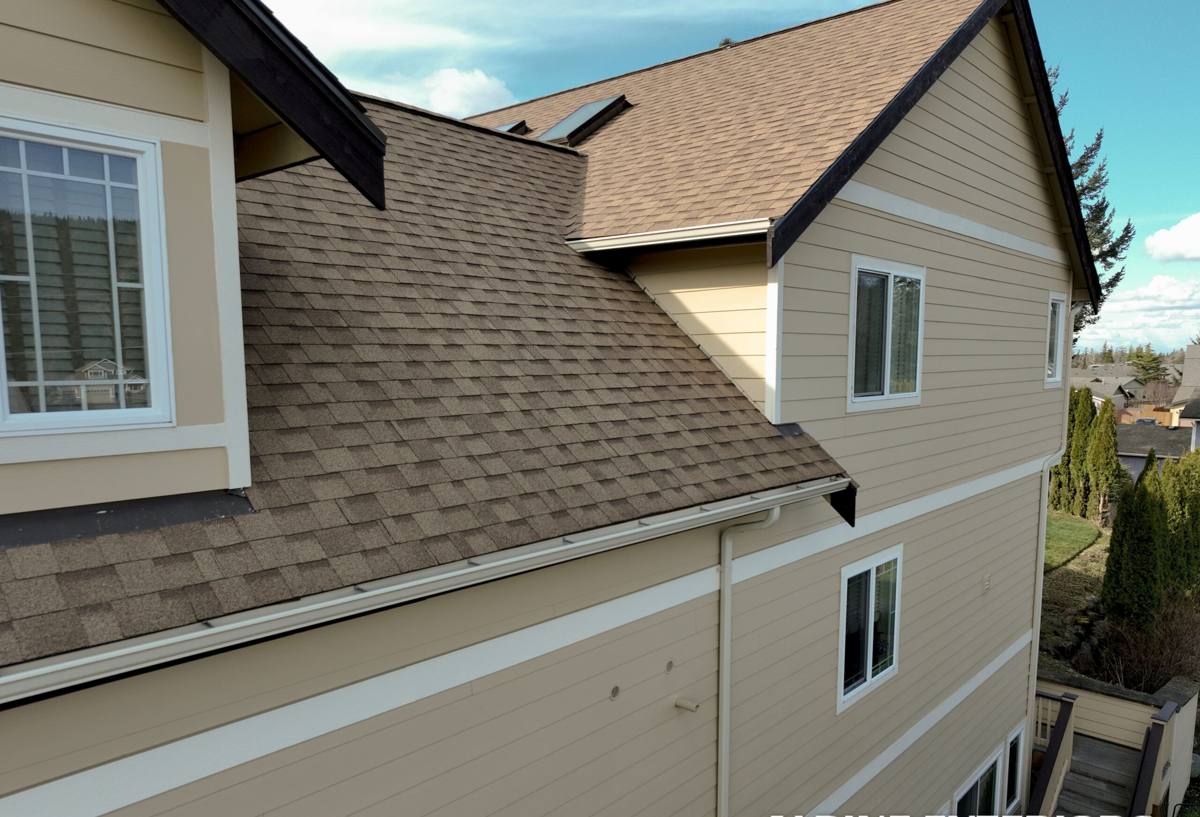
What the Climate Actually Does to a Deck Out Here
Before talking materials or process, it helps to understand the three things working against a Ship Harbor deck every day:
Salt Air
Airborne salt accelerates corrosion on any exposed metal — fasteners, joist hangers, post bases, railing hardware. Standard coated screws and hangers that are rated for general outdoor use can start rusting at the head or losing their coating in a marine environment years before they would inland. Once a fastener starts to corrode, it weakens the connection it's holding, and that's not something you can see just by looking at the deck surface.
Driving Rain
Storms coming off the water don't just fall straight down — wind-driven rain gets pushed sideways into ledger connections, under rail caps, and into any gap where flashing was skipped or done poorly. Over time, water that gets behind a ledger board or into an unflashed post connection causes rot from the inside, often long before it's visible from outside.
Moss and Mildew
Shade, moisture, and mild temperatures are exactly what moss wants, and Ship Harbor has all three for a good chunk of the year. Moss on a deck surface isn't just cosmetic — it holds moisture against the wood or composite surface and makes the deck genuinely slippery, which is a real fall hazard on stairs and near door thresholds.
Choosing Decking Materials That Actually Hold Up Here
There's no single "best" decking material — it depends on budget, how much upkeep you want to do, and how close to the water your lot sits. Here's how the common options actually perform in a Ship Harbor-type environment:
| Material | Salt Air Performance | Moss Resistance | Maintenance |
|---|---|---|---|
| Pressure-treated lumber | Good if fasteners and hardware are matched to it | Needs regular cleaning and treatment | Annual cleaning, periodic re-staining/sealing |
| Cedar | Naturally rot-resistant, but softens over time near salt spray | Needs cleaning; holds moisture in grain | Regular sealing to keep its color and resist checking |
| Capped composite | Excellent — won't corrode or absorb salt | Surface algae/moss still needs occasional washing | Low — mostly periodic rinsing |
| PVC decking | Excellent — fully synthetic, no wood fibers to hold moisture | Same as composite; smooth caps clean easily | Low |
We're honest with clients about trade-offs rather than pushing one product. Composite and PVC cost more up front but save real time and money on maintenance over a coastal lifespan. Cedar and pressure-treated lumber cost less initially and can absolutely work here, but only if you're willing to keep up with cleaning and resealing on a real schedule — skip a year or two near Ship Harbor and moss and gray weathering catch up fast.
Framing and Structure
Whatever decking surface you choose, the framing underneath matters just as much and is far more expensive to fix later. We use pressure-treated framing rated for ground contact where it's called for, and we pay close attention to any spot where framing members meet — those joints are where trapped moisture does the most damage over time.
Fasteners and Hardware
This is the detail most likely to get shortcut on a coastal deck, and it's the one we won't compromise on. In a marine air environment, we spec stainless steel or heavy hot-dip galvanized fasteners and connectors rated for the exposure, not the general-purpose exterior-rated hardware that's fine twenty miles inland. It costs more per box. It's also the difference between hardware that's still sound in fifteen years and hardware that's rusting and weakening the structure in five.
The Details That Separate a Correct Deck From a Problem Deck
Most deck failures we get called out to fix in this area trace back to a handful of details that were skipped or rushed during the original build. These are non-negotiable on every deck we build:
- Ledger flashing — proper metal flashing and a water-resistant barrier where the deck attaches to the house, so driving rain can't work its way behind the ledger board
- Correct footing depth — footings sized and set to the depth required for our soil and frost conditions, not just poured to "what's always worked"
- Slope for drainage — decking installed with a slight pitch away from the house so water sheds instead of pooling
- Joist tape or cap protection — protecting the tops of joists so rainwater doesn't sit in the wood at every fastener point
- Airflow gaps — proper spacing between boards and beneath the deck so moisture can dry out instead of staying trapped
- Corrosion-appropriate hardware — every hanger, screw, and bolt matched to the marine exposure, not just the decking material
None of these add much to the cost of a new deck. Skipping any one of them is exactly how a deck that looks fine for the first two or three years starts having real problems by year five or six.
How We Build a Deck in the Ship Harbor Area
Our process is the same whether it's a full rebuild or a new deck from scratch, adjusted for lot conditions:
- On-site assessment — we look at sun and wind exposure, soil, drainage patterns, and how close the site sits to salt air influence, since that changes our material and hardware recommendations
- Design and material selection — we walk through decking, railing, and structural options honestly, including the maintenance commitment each one carries
- Permitting — we handle the permit application and coordinate required inspections through Skagit County or the City of Anacortes, whichever applies to the property
- Framing and footings — built to the depth and spacing the site and code require, with corrosion-rated hardware throughout
- Ledger and flashing work — the connection point to the house gets the most careful attention on the whole project
- Decking, railing, and finish work — installed with proper gaps, fastening, and slope for drainage
- Final walkthrough — we go over basic care for whatever material you chose, so you know what upkeep to expect and when
Moss, Mildew, and Keeping a Deck Sound Long-Term
Even a well-built deck in this climate needs some seasonal attention. The goal isn't to eliminate moisture exposure — that's not realistic this close to the water — it's to keep water moving off and through the deck instead of sitting on it or trapped in it.
For wood decks, that means periodic cleaning to remove moss and organic buildup before it stains or holds moisture against the surface, plus resealing on a schedule rather than waiting until the wood looks gray and dry. For composite and PVC, it's mostly a matter of rinsing off surface algae and debris so it doesn't build up in the grain pattern. On any deck, keeping gutters and nearby drainage clear matters more here than it would on a drier lot, since extra roof runoff landing near the structure adds to what the deck already has to shed.
Permits and Code Considerations
Most new decks and many deck replacements in Anacortes and unincorporated Skagit County require a permit, particularly once you're dealing with structural framing, footings, or a deck attached to the house. Requirements can include guardrail height for elevated decks, baluster spacing, stair geometry, and footing depth, and they can vary depending on exact location and whether the property falls under city or county jurisdiction. We handle the permit process as part of the job so you're not left tracking down requirements or scheduling inspections yourself.
What to Ask Before Hiring a Deck Builder for This Area
- Ask what fastener and hardware grade they use — general exterior-rated hardware isn't the same as marine or coastal-rated hardware
- Ask how they handle ledger flashing, specifically, not just "we flash it"
- Ask whether they pull permits themselves or expect you to
- Ask about footing depth and how they determine it for your specific lot
- Ask what maintenance the material you're choosing will actually require in a salt-air environment, not just in general
A contractor who can answer these specifically, rather than in general terms, is usually one who has actually built decks in this kind of exposure before.
Why Local Experience in Ship Harbor Matters
A deck built to a generic inland spec sheet can still pass a basic inspection and look good on install day. The problems show up later — corroded hardware, a soft ledger connection, moss that keeps coming back no matter how it's cleaned — and by then the fix is far more disruptive and expensive than getting it right the first time. Building decks regularly in Anacortes and around Ship Harbor means we're not guessing at what this specific stretch of coastline does to a structure over time; we're building to what we've actually seen hold up and what we've seen fail.
If you're planning a new deck or need an honest look at one that's already showing its age, we're happy to come out, look at your specific site and sun/wind exposure, and put together a free, no-pressure estimate using the form below.