 Anacortes Siding
 Windows Built for Skyline's Exposure, Not a Catalog Average
Skyline sits close enough to the water that its homes take a different kind of weather beating than houses a few miles inland. Salt-laden air off Fidalgo Bay and Rosario Strait works into window hardware and finishes year-round. Driving rain off winter storms tests every seal and sill. And the long, damp moss season that Skagit County is known for keeps north- and west-facing frames wet for weeks at a stretch. A window that performs fine in a dry inland climate can fail early here — hardware pits, seals soften, and frames hold moisture instead of shedding it.
When we replace windows in Skyline, we're not just swapping glass for better glass. We're choosing frame materials, hardware finishes, and flashing details that are matched to this specific exposure. That's the difference between a window that looks good for a year and one that still operates smoothly and keeps the weather out a decade from now.
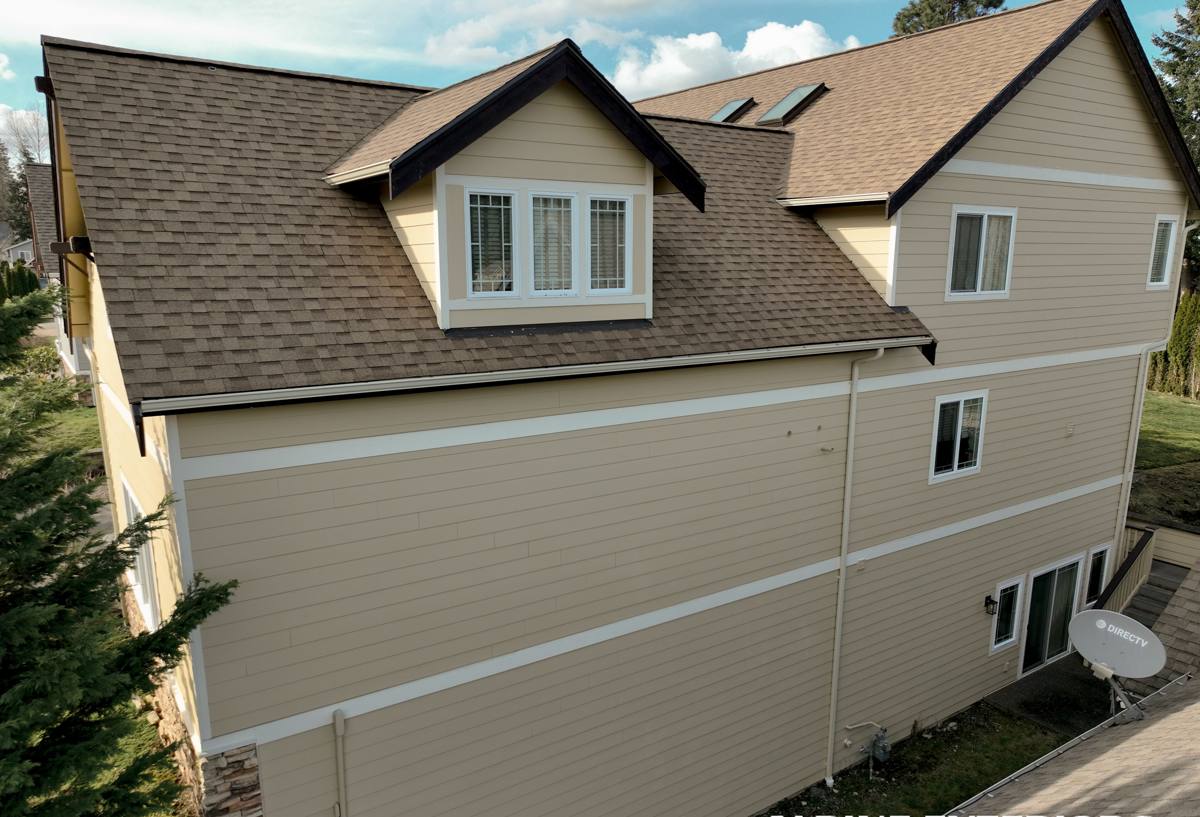
What Skyline Homes Actually Need From Their Windows
Standing Up to Salt Air
Corrosion is the quiet killer of window hardware in coastal neighborhoods. Cranks, locks, and hinges made from lower-grade metals can start sticking or pitting within a few seasons of salt exposure. We spec corrosion-resistant hardware and finishes on every Skyline install, because a window that's hard to latch is a window that eventually gets left cracked open — which invites moisture straight into the wall cavity.
Shedding Driving Rain, Not Absorbing It
Wind-driven rain doesn't just hit a window head-on — it gets pushed sideways and upward under sills and around trim. Anacortes gets its share of storms rolling in off the Strait, and a window with a weak sill pan or undersized weep system will let water track inward over time, even if it looks dry from outside. Proper flashing and drainage matter as much as the window unit itself.
Resisting Moss and Mildew Buildup
Anything that stays damp in this region grows moss and mildew, window frames included. Wood-clad frames with poor finish protection, or vinyl frames with tight-fitting trim that traps moisture, both invite growth around the perimeter. We favor materials and installation details that let water run off and air circulate, rather than pockets where moisture and organic buildup can sit against the frame.
Choosing the Right Window Material for This Climate
There's no single "best" window material for every home — it depends on your home's exposure, your maintenance appetite, and your budget. Here's how the common options actually perform in Skyline's conditions, based on what we see holding up in the field.
| Material | Coastal Performance | Maintenance | Trade-Offs |
|---|---|---|---|
| Vinyl (fusion-welded) | Good — won't rust or rot; UV-stable frames hold up well | Low — occasional wash-down | Fewer color options; frame can't be repainted |
| Fiberglass | Very good — dimensionally stable in temperature swings, resists moisture | Low | Higher upfront cost than vinyl |
| Aluminum-clad wood | Fair to good if properly finished and flashed; interior wood needs to stay sealed | Moderate — exterior clad, but seals and joints need periodic inspection | Moisture intrusion at poor seals can damage the wood core over years |
| Solid wood | Poor without diligent upkeep — prone to swelling, rot, and paint failure in salt air | High — regular repainting and sealing | We generally steer coastal Skyline homeowners away from this unless it's a historic-match requirement |
For most Skyline homes, we recommend vinyl or fiberglass frames with a coastal-grade hardware package. Both resist corrosion and moisture absorption without the upkeep schedule that wood or poorly-clad frames demand. If your home's architecture calls for a wood look, aluminum-clad options can work — but only with careful attention to sealing every joint, since a wood core that stays wet in this climate won't recover the way it might inland.
Glass Packages: What Actually Earns Its Keep Here
Energy efficiency isn't just about the frame — the glass package does most of the work on heat loss and condensation control. In our climate, a few features matter more than others:
- Double or triple pane with low-E coating — reduces heat loss through the glass and cuts down on cold-to-the-touch surfaces near the window in winter.
- Argon or krypton gas fill — improves insulating value between panes without adding bulk.
- Warm-edge spacer systems — the metal spacer between panes is often where condensation and seal failure start; a warm-edge design resists that better than older aluminum spacers.
- Appropriate solar heat gain coefficient — Anacortes doesn't need aggressive solar blocking like a hot inland climate does; a balanced coefficient lets in welcome winter light without excessive summer glare.
We don't push triple-pane on every job — for most Skyline homes, a quality double-pane low-E unit with argon fill hits the right balance of performance and cost. Triple-pane makes more sense on north-facing rooms or homes with unusually high heating bills.
Installation Is Where Most Window Failures Actually Start
We say this often because it's true more often than homeowners expect: a mediocre window installed correctly will outperform a premium window installed poorly. Most of the window failures we get called out to fix — fogged glass, drafts, water staining on interior sills, soft spots in the wall below a window — trace back to installation shortcuts, not product defects.
Our Process for Skyline Installs
- On-site assessment. We look at each opening's exposure, existing flashing condition, and any signs of past moisture intrusion before recommending a window package.
- Remove and inspect. When we pull the old window, we check the rough opening and sheathing for hidden rot or damage — common in older Skyline homes that have taken decades of coastal weather.
- Repair the opening. Any compromised framing or sheathing gets addressed before a new window goes in. Installing a new window over a damaged opening just hides the problem.
- Flash and seal correctly. Sill pan flashing, house wrap integration, and properly lapped water-resistive barrier details — done in the sequence that actually sheds water, not just caulked over.
- Set and shim the unit. Proper shimming keeps the window square so it operates smoothly and seals evenly for years, not just on install day.
- Insulate the gap correctly. Low-expansion foam or backer rod and sealant around the frame — overfilled foam can actually bow a frame out of square.
- Finish and inspect. Interior and exterior trim work, then a final operational check on every window before we call the job done.
Signs Your Skyline Home's Windows Need Attention
Not every window problem means a full replacement, but these are the signs worth having looked at:
- Visible fog or moisture between panes — the seal has failed and the insulating gas is gone
- Windows that are hard to open, close, or latch — often hardware corrosion from salt exposure
- Soft or discolored trim or sill areas — a sign water is getting past the flashing
- Noticeable drafts even with the window fully latched
- Visible moss or persistent mildew staining around the frame perimeter
- A jump in heating costs without another clear explanation
If you're seeing one or two of these, it may be a repair or reseal rather than a full window swap. We'll tell you honestly which situation you're in — we'd rather fix what's actually wrong than sell a replacement you don't need yet.
Cost Factors for Skyline Window Projects
Every home and opening is different, so we don't quote sight-unseen — but these are the main factors that move the price on a Skyline window project:
| Factor | Why It Matters |
|---|---|
| Number and size of openings | Larger or more numerous windows increase material and labor |
| Frame material chosen | Vinyl is generally the most cost-effective; fiberglass and clad-wood cost more upfront |
| Condition of the existing opening | Hidden rot or sheathing damage found during removal adds repair time |
| Access and second-story work | Upper-floor windows or difficult access affect labor and staging |
| Glass package | Triple-pane or specialty coatings add cost over standard low-E double-pane |
| Trim and finish work | Matching existing interior/exterior trim profiles can add scope |
Most full-home window replacement projects in this area run into the mid five figures depending on home size and scope, with single-window repairs or replacements costing far less. We'll walk your specific home and give you real numbers, not a generic range that doesn't match your house.
Why a Skyline-Familiar Crew Makes a Real Difference
Anacortes and the surrounding Skagit County coastline don't behave like a generic Pacific Northwest climate on paper. The specific combination of salt exposure, wind-driven rain direction, and moss season timing shapes decisions we make on every job — which hardware finish to spec, how aggressive the flashing detail needs to be on a west-facing wall, when in the year installation conditions are actually favorable. A crew that's worked this specific area brings that judgment to your project instead of relearning it on your home.
We also know what tends to go wrong in Skyline homes specifically — the areas where older construction details haven't held up against decades of this exposure, and where extra attention during removal and re-flashing pays off. That local pattern recognition is hard to replicate with a crew that mostly works elsewhere.
Get a Straight Answer on Your Windows
If your Skyline home's windows are drafty, fogged, hard to operate, or just old enough that you're wondering whether it's time, we're happy to take a look and give you an honest assessment — no pressure, no upsell. Fill out the form below for a free estimate, and we'll walk you through what your home actually needs.