 Anacortes Siding
 Cap Sante Roofs Work Harder Than Most
Homes on and around Cap Sante sit close to the water, elevated, and often facing open exposure toward Guemes Channel and the Salish Sea. That location is part of why people love living there, but it's also why roofs in this pocket of Anacortes wear differently than roofs a few miles inland in Skagit County. Salt-laden air corrodes exposed metal faster, wind-driven rain gets pushed sideways into laps and flashings that would stay dry in a calmer spot, and the long, damp shoulder seasons here give moss and moisture months to work into a roof system rather than days.
None of that means a roof on Cap Sante needs to be exotic or overbuilt. It means the details — fastener choice, underlayment, ventilation, flashing at every penetration — have to be done correctly for this specific exposure, not just to a generic code minimum. That's the difference between a roof that looks fine for two years and one that actually holds up through a couple decades of Anacortes winters.
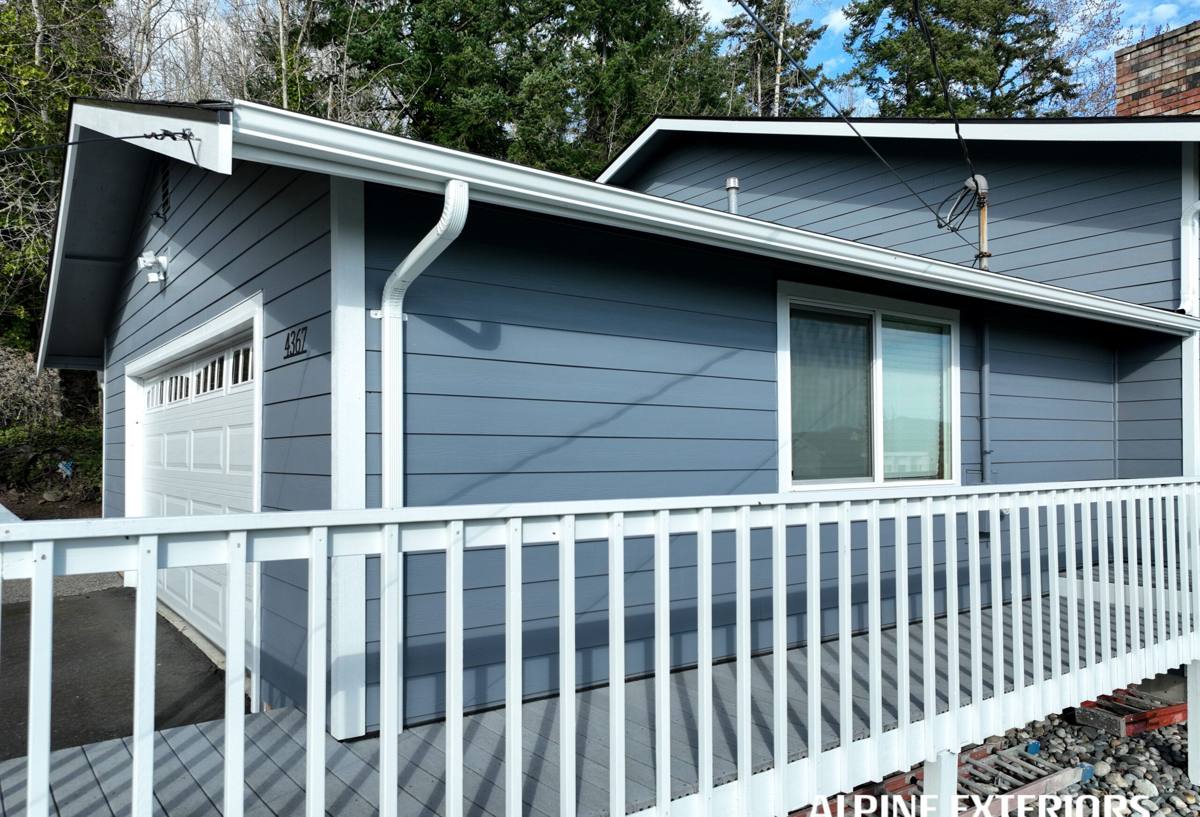
What Salt Air, Driving Rain, and Moss Actually Do to a Roof
Salt Air and Corrosion
Airborne salt accelerates rust on unprotected steel fasteners, cheap flashing, and lower-grade metal roofing panels. Over years, corroded fasteners back out or lose their grip, and pitted flashing stops shedding water the way it should. This is why fastener and flashing material matters more here than it does on a roof set back from the water.
Wind-Driven Rain
Anacortes gets plenty of straight-down rain, but the exposure near Cap Sante also sees rain pushed at an angle by wind coming off the water. Wind-driven rain finds weaknesses that vertical rain never would — under shingle tabs, around chimney and skylight flashing, and at ridge and hip caps that were nailed a little too high or a little too low. A roof built for this exposure needs tighter fastening patterns, properly lapped underlayment, and flashing details sized for sideways water, not just water falling straight down.
Moss Season
Skagit County's mild, wet stretch from fall through spring is exactly the environment moss and algae thrive in. Moss doesn't just look bad — it holds moisture against the roofing surface, lifts shingle edges as it grows, and works its way under laps and around fasteners over time. North-facing slopes and shaded sections near trees are usually hit hardest.
Signs a Cap Sante Home Actually Needs a New Roof
Not every roofing issue means full replacement — sometimes a repair is the honest answer. But certain signs point toward a roof that's past the point where patching makes sense:
- Granules collecting in gutters or at downspout outlets, a sign the shingle surface is wearing thin
- Shingles that are cupping, curling at the edges, or cracking when you look closely
- Moss buildup that keeps coming back within a season or two of cleaning
- Soft or spongy spots when walking the roof, which usually means the decking underneath is compromised
- Daylight visible through the roof deck from inside the attic
- Recurring leaks around chimneys, skylights, or vent pipes despite repeated flashing repairs
- A roof that's 20+ years old for asphalt composition, or nearing the end of its rated service life for its material
- Visible sagging along the ridge line or roof plane
If you're seeing two or more of these, it's worth having someone look at the whole system rather than chasing individual leaks one at a time.
What a Correct Roof Replacement Actually Involves
A new roof is more than stripping old shingles and nailing down new ones. Done right, it's a full system:
Tear-Off and Deck Inspection
Full removal of the old roofing down to the deck, with every sheet of sheathing inspected for rot, delamination, or soft spots — especially common around older flashing points and eaves on homes that have taken years of coastal moisture. Bad decking gets replaced, not covered over.
Underlayment
The underlayment is the roof's backup barrier against wind-driven rain and ice-dam-style backup at eaves. For this exposure, we lean toward synthetic or self-adhered underlayment at eaves, valleys, and other vulnerable areas rather than relying on minimum-code coverage alone.
Ventilation
Balanced intake and exhaust ventilation keeps the attic dry and temperature-regulated, which slows moss growth from the underside and extends shingle life. A roof that traps moisture underneath fails faster no matter how good the shingles on top are.
Flashing
Every chimney, skylight, vent pipe, wall intersection, and valley gets new, correctly lapped flashing — not old flashing reused under new shingles. This is the single most common point of failure we find on roofs that leak despite otherwise decent shingles.
Fastening
Corrosion-resistant fasteners, driven at the pattern and depth the manufacturer specifies for high-wind exposure, not the fastest pattern to install.
Comparing Roofing Materials for This Exposure
There's no single "right" material for every Cap Sante home — it depends on your roof's pitch, your home's style, and your budget. Here's how the common options stack up for this specific climate:
| Material | Performance in Salt Air / Driving Rain | Moss Resistance | Typical Lifespan |
|---|---|---|---|
| Asphalt composition shingle | Good, with proper underlayment and flashing | Moderate — algae-resistant granule options help | 20–30 years |
| Standing seam metal | Excellent when using marine-grade or coated fasteners and panels | High — sheds moss buildup better than shingles | 40–60 years |
| Synthetic composite (shake-style) | Good, holds up well to wind-driven rain | Moderate to high depending on product | 30–50 years |
| Cedar shake | Requires more maintenance in this exposure; moisture-sensitive | Low without regular treatment | 20–30 years with upkeep |
We'll walk through the honest trade-offs for your specific roof — pitch, sun exposure, tree cover, and budget all factor in. There's rarely one "best" answer; there's a best answer for your house.
What Drives Cost on a Cap Sante Roof
| Factor | Why It Matters Here |
|---|---|
| Roof size and pitch | Steeper pitches near the water often need additional fall-protection setup and take longer to work safely |
| Deck condition | Older homes with years of coastal moisture exposure sometimes need more sheathing replacement than expected |
| Material choice | Metal and higher-end synthetics cost more upfront but need less attention in salt air over time |
| Number of penetrations | Chimneys, skylights, and multiple vent stacks each add flashing labor |
| Access and staging | View lots with limited driveway or yard space can affect dumpster placement and material staging |
Broad ranges vary a lot based on these factors, which is why we always inspect and measure before quoting — we don't give ballpark numbers over the phone for a job this exposure-dependent.
Our Process
- On-site inspection. We walk the roof, check the attic from inside, and look at flashing points, ventilation, and deck condition — not just the shingle surface.
- Written estimate. A clear scope of work and pricing, with material options explained honestly, including trade-offs for your specific exposure.
- Tear-off and deck repair. Full removal, deck inspection, and replacement of any compromised sheathing before anything new goes down.
- System installation. Underlayment, flashing, ventilation, and roofing material installed to manufacturer spec and built for wind-driven rain, not just code minimum.
- Final walkthrough. We review the finished roof with you, including gutters, downspouts, and any areas that will need periodic moss maintenance.
Why Hiring a Crew That Already Works This Area Matters
Cap Sante's exposure isn't the same as a roof three miles inland, and a crew that only occasionally works this close to the water can miss details that matter here — the right flashing metal, the fastener spec that resists salt corrosion, the underlayment coverage that actually stops wind-driven rain. Working regularly in Anacortes and across Skagit County means we've seen how roofs in this specific exposure age, what fails first, and what holds up.
Local, licensed roofing crews also know the permitting process with the City of Anacortes, understand typical HOA or view-corridor considerations that come up on some Cap Sante properties, and can move fast when weather windows are tight — which matters more here than almost anywhere else, given how often a dry stretch has to be planned around.
After Installation: Keeping a New Roof Moss-Free
A correctly installed roof still benefits from basic upkeep in this climate:
- Keep gutters clear so water isn't backing up under the eave edge
- Trim back overhanging branches to reduce shade and debris on north-facing slopes
- Have moss growth addressed early, before it lifts shingle edges or holds moisture against the surface
- Schedule a periodic roof check, especially after major windstorms common to this exposure
A little maintenance goes a long way toward protecting the investment of a properly installed roof.
If your Cap Sante home's roof is showing its age or you just want an honest opinion on where it stands, we're happy to take a look. Fill out the form below for a free, no-pressure estimate — we'll inspect the roof, explain what we find, and give you real options for your home and budget.