 Anacortes Siding
 Siding Installation Built for La Conner's Waterfront Exposure
La Conner sits right on the Swinomish Channel, close enough to the water that homes there deal with a heavier dose of salt air, wind-driven rain, and shade-driven moss growth than a house sitting a few miles inland in Skagit County. We install siding for homeowners in and around La Conner, and the way we approach that work is shaped directly by what that exposure does to an exterior over time. This page covers what a correct siding installation looks like for this specific area, not a generic overview of the service.
Everything here is general guidance for the La Conner area. We're not describing any specific property or referencing any particular street or landmark — just what we've learned installing and evaluating siding on homes that face this kind of coastal exposure.
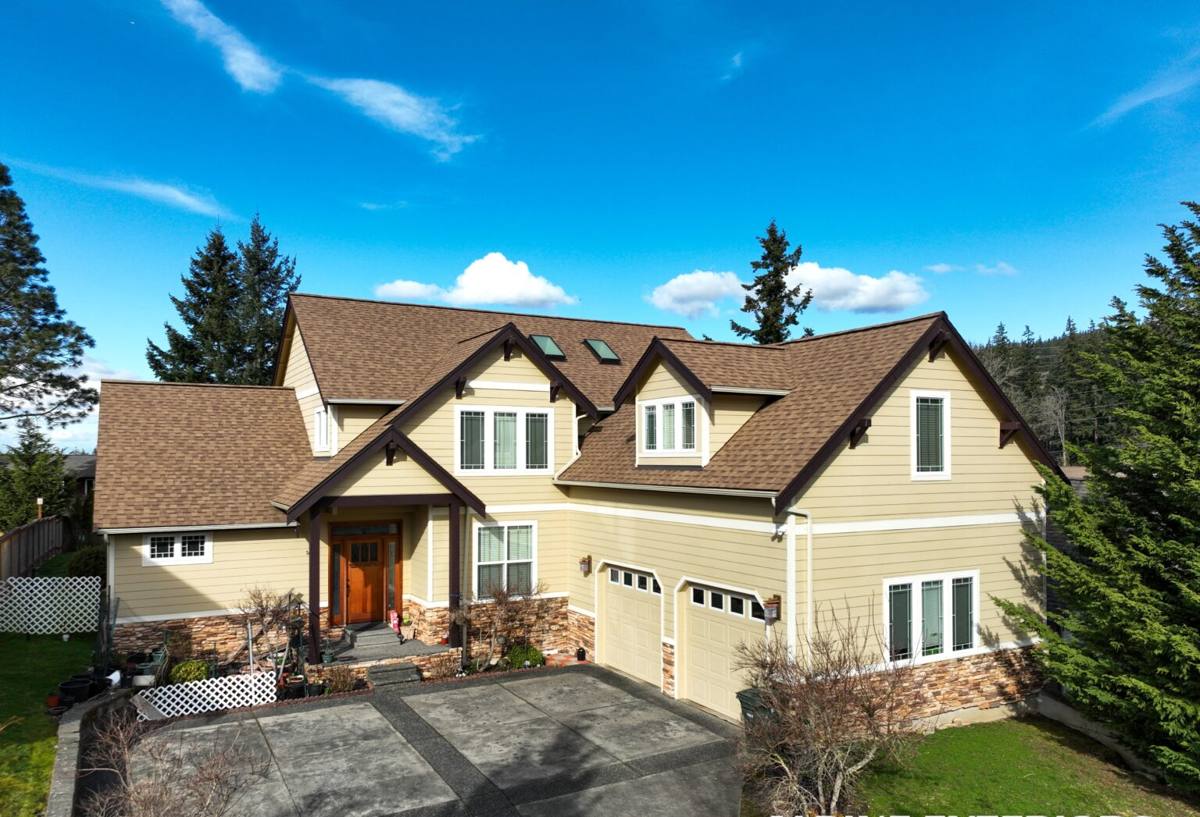
What Salt Air, Driving Rain, and Moss Actually Do to Siding
Three conditions define La Conner's exterior climate, and they don't act independently — they compound each other.
Salt Air
Airborne salt from the channel and the broader Puget Sound settles on exterior surfaces continuously, not just during storms. On siding, that means faster breakdown of paint film and caulking, and accelerated corrosion of any exposed metal fasteners, flashing, or trim hardware that isn't rated for coastal use. A siding product that isn't engineered to resist this kind of exposure will show fading, chalking, and surface degradation years before it would somewhere further from the water.
Driving Rain
Skagit County storms coming off the water rarely fall straight down — wind pushes rain sideways into wall assemblies, which puts real pressure on every seam, joint, and penetration in the siding system. This is where installation quality matters more than product choice. Correct flashing, house wrap integration, and butt-joint treatment are what keep wind-driven rain from finding its way behind the siding and into the wall cavity.
Moss and Sustained Moisture
Shaded walls and north-facing elevations near the water can stay damp for extended stretches, especially through the fall and winter months. That sustained moisture is exactly what moss, algae, and mildew need to establish themselves on a siding surface. Beyond the cosmetic issue, prolonged moisture contact against a wall surface is what eventually causes rot, delamination, and paint failure in products that aren't built to shrug it off.
Why We Only Install James Hardie Fiber Cement
We install James Hardie fiber cement siding exclusively. We don't install vinyl, LP SmartSide, primed spruce, cedar, or other fiber cement brands like Allura or Cemplank — not because those products can't be installed correctly somewhere, but because after years of exterior work in this climate, Hardie is the only siding system we're willing to stand behind on a home facing La Conner's level of exposure.
- Non-combustible core: Hardie's fiber cement composition doesn't burn, which matters for wildfire-adjacent risk and is simply a better long-term material property regardless of fire season concerns.
- ColorPlus factory finish: a baked-on finish applied under controlled conditions holds color and resists fading from UV and salt exposure far better than field-applied paint, and it comes with its own finish warranty.
- Climate-engineered HZ product lines: Hardie manufactures HZ5 formulations specifically engineered for moisture and freeze-thaw performance in wetter climates like ours, rather than a one-size-fits-all product.
- Dimensional stability: fiber cement doesn't swell, cup, or rot the way wood-based products can when they take on moisture, which matters directly given how much sustained dampness La Conner walls deal with.
- Strong transferable warranty: a manufacturer warranty that holds up and can transfer to a new owner adds real value if the home is ever sold.
Vinyl siding is inexpensive and low-maintenance in mild climates, but it can warp under direct sun exposure and its seams and butt joints are more vulnerable to wind-driven rain intrusion than a properly installed fiber cement system. LP SmartSide and other engineered wood products perform reasonably well in dry climates but rely on an intact factory coating to keep moisture out — if that coating is compromised at a cut edge or fastener point, the wood-strand core is vulnerable to swelling and rot, which is a real liability given how much moisture La Conner siding sits in. Primed spruce and cedar are beautiful materials, but as solid wood they require an ongoing maintenance commitment — repainting, caulking, and moisture inspection — that most homeowners underestimate until the siding starts showing problems. We'd rather put a product on your home that doesn't force you into that maintenance cycle.
What a Correct Siding Installation Involves
The siding material is only part of the job. In an exposure zone like La Conner, the installation details are what actually determine whether the wall stays dry for the next 30-plus years.
Water Management Layer
Before any siding goes up, the wall needs a correctly installed weather-resistant barrier (house wrap or building paper) with properly lapped and taped seams. This layer is the backup system — it's what protects the wall if any water gets past the siding itself, which, given driving rain off the channel, it eventually will at some point in the home's life.
Flashing at Every Penetration
Windows, doors, vents, hose bibs, light fixtures, and any other wall penetration need proper flashing that directs water outward and downward, never inward. This is one of the most common places we find failures on older installations — flashing that was skipped, undersized, or installed backward.
Fastener Selection and Placement
Given the salt exposure in this area, fastener corrosion resistance isn't optional. Hardie's own installation specifications call for corrosion-resistant fasteners, and in a coastal zone like La Conner, that spec should be followed strictly rather than treated as a minimum. Fasteners also need to be placed and driven to Hardie's exact spec — overdriven or underdriven nails compromise the plank's ability to move with temperature and moisture changes.
Joint Treatment and Caulking
Butt joints between siding pieces are one of the most exposure-prone details on the entire wall. They need to be treated per Hardie's specifications — whether that's a factory joint, an H-channel, or a properly caulked and primed field joint — because a sloppy butt joint is a direct path for wind-driven rain to get behind the siding.
Clearance and Drainage
Siding needs correct clearance from grade, roof lines, decks, and other surfaces so water has somewhere to go instead of wicking up into the bottom edge of the plank. This is a detail that's easy to shortcut and hard to notice until moisture damage shows up years later.
Our Process for a La Conner Installation
- On-site assessment: we look at the home's exposure — how close it sits to the water, which walls take the most direct wind-driven rain, and where existing moss or moisture staining is already showing up.
- Existing condition check: where old siding is coming off, we inspect the sheathing and framing underneath for any rot or moisture damage that needs to be addressed before new siding goes on. Covering up an existing problem is not something we do.
- Product and detail plan: we spec the right Hardie HZ product line, profile, and ColorPlus finish for the home, along with a flashing and water-management plan specific to that structure.
- Installation to spec: our crews install to Hardie's published installation guidelines, not a shortcut version — correct fastener spacing, joint treatment, clearances, and flashing at every penetration.
- Final walkthrough: we go over the finished work with the homeowner, including basic care guidance for keeping the siding performing well in this climate.
Why Hiring a Crew That Already Works La Conner Matters
Siding installation quality depends heavily on whether the crew doing the work understands the specific conditions the home is facing. A crew that mostly works inland, drier parts of the state may not default to the flashing and joint details that matter most here, simply because they don't run into wind-driven rain and salt exposure as often. We work throughout Skagit County and the wider Anacortes area, which means La Conner's combination of coastal salt air, driving rain, and extended moss season is a normal part of our workday, not an unusual condition we have to adjust for on the fly.
That local familiarity also shows up in smaller ways — recognizing early moss staining as a moisture signal rather than just a cleaning issue, knowing which elevations on a typical La Conner lot take the worst of the weather, and building in the clearances and drainage details that this specific exposure calls for.
Cost Factors for a La Conner Siding Installation
Every home is different, and we don't quote pricing without seeing the property, but the factors below are what typically move the cost of a siding installation up or down in this area.
| Factor | Why It Matters Here |
|---|---|
| Home size and wall complexity | More square footage, corners, and roof lines mean more material and more cut, seam, and flashing work. |
| Existing siding removal and disposal | Tear-off adds labor and disposal cost, and reveals whether sheathing repair is needed before new siding goes on. |
| Sheathing or framing repair | Moisture damage found during tear-off, more likely on shaded or water-facing walls, needs to be fixed before installation continues. |
| Hardie product line and profile | Lap siding, panel systems, and shingle-style profiles carry different material and labor costs. |
| Trim, fascia, and soffit scope | Coordinating trim and soffit work with the siding installation affects both cost and the quality of the finished water management. |
| Site access | Waterfront lots and tighter properties can affect staging, scaffolding, and material handling. |
Signs Your Current Siding Needs Attention
- Persistent moss or algae growth that returns quickly after cleaning
- Soft spots, bubbling, or visible swelling anywhere on the siding surface
- Paint that's peeling, chalking heavily, or failing faster than expected
- Visible gaps, cracking, or separation at butt joints and corners
- Staining or dark streaking below window sills or trim boards
- Rusted or corroded fasteners visible on the siding face
- A musty smell or visible staining on interior walls near exterior siding
Any one of these on its own isn't necessarily an emergency, but in a coastal exposure zone like La Conner, they're worth having looked at before they turn into a sheathing or framing problem.
Get a Free, No-Pressure Estimate
If you're planning a siding installation for a La Conner home, or you're not sure whether your current siding is holding up the way it should, we're happy to take a look and walk you through what we see. There's no pressure and no obligation — just a straight assessment from a crew that already knows what this stretch of Skagit County does to an exterior. Use the form below to request your free estimate.