 Anacortes Siding
 Guemes Island Puts Siding Through a Different Kind of Test
Guemes Island sits just off Anacortes, separated from the mainland by a short ferry ride and a lot more direct exposure to Rosario Strait and Puget Sound weather. Homes here take on salt-laden air, wind-driven rain off the water, and — on the wooded and shaded lots common across the island — a long moss season that mainland Anacortes neighborhoods don't deal with quite as aggressively. Siding that would hold up fine twenty miles inland can start showing real problems on Guemes within a few seasons if it wasn't installed, sealed, or maintained with that exposure in mind.
Siding repair here isn't just patch-and-paint work. It means understanding why a board failed in the first place — usually moisture finding a way in through a joint, a fastener, or a piece of trim — and fixing the actual cause, not just the spot where it shows.
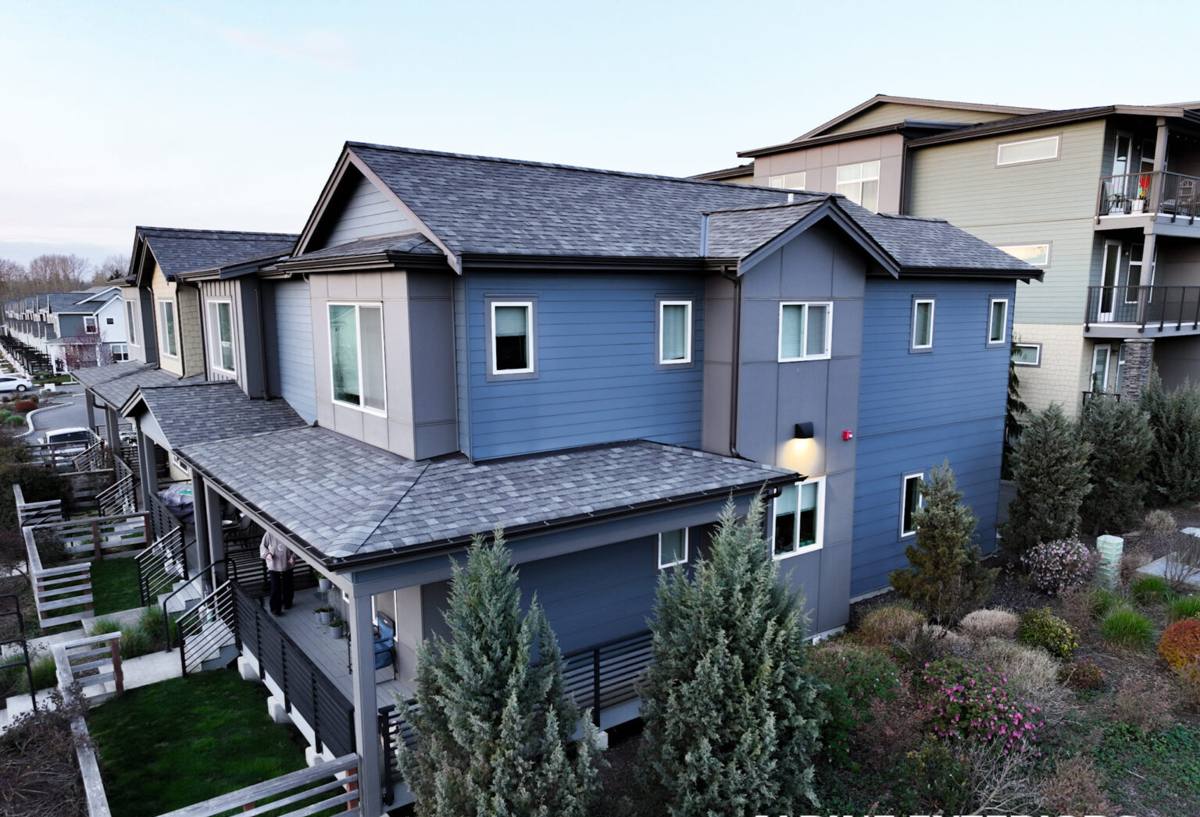
Common Siding Problems We See on Guemes Island Homes
Moisture Intrusion and Hidden Rot
Driving rain off the water pushes water sideways into siding in a way that calm-weather rain never tests. On homes with any gaps in flashing, caulking, or house wrap, that wind-driven moisture works its way behind the siding over time. By the time it's visible as a soft spot, discoloration, or a bulge, there's often already damage to the sheathing or framing behind it.
Moss and Algae Staining
Shaded, tree-covered lots — common across the island — stay damp longer after every rain. That extended dampness is exactly what moss and algae need to take hold, especially on north-facing walls and anywhere siding sits close to overhanging branches. Left alone, persistent moss growth holds moisture against the siding surface and accelerates whatever's already going wrong underneath.
Nail Pops and Board Separation
Wood siding and wood-based composite products expand and contract with moisture cycles. On a marine-exposed site like Guemes, that cycle is more frequent and more extreme, which is why nail pops, cupping, and boards separating at the seams show up more often here than in drier, more sheltered parts of the county.
Caulk and Sealant Failure
Caulk at trim joints, window and door penetrations, and butt joints is a maintenance item, not a permanent fix — and salt air and UV exposure shorten its working life. Once it cracks or pulls away, it stops shedding water and starts trapping it instead, which is often the actual starting point for problems that get blamed on the siding itself.
Impact and Storm Damage
Winter storms off the strait bring wind-driven debris, and waterfront and tree-adjacent properties see their share of dinged, cracked, or knocked-loose siding after a bad blow. Damaged sections need to be addressed promptly — an open crack or gap is a direct path for water into the wall assembly.
Repair or Replace? How We Make That Call
Not every siding problem calls for tearing off a wall. But not every problem should be patched, either. The right call depends on how contained the damage is, what's happening behind the siding, and how old and how far gone the existing material already is.
| Factor | Leans Toward Repair | Leans Toward Replacement |
|---|---|---|
| Extent of damage | Isolated boards or a single wall section | Widespread across multiple elevations |
| Underlying structure | Sheathing and framing are sound | Rot has reached sheathing or framing |
| Material condition | Siding is otherwise in good shape | Siding is near end of service life |
| Cause of failure | One identifiable, fixable source | Recurring failures across the assembly |
| Color/material match | Close match available | Discontinued or badly weathered original |
When a repair is the right call, we fix it as a repair — no upselling a full re-side to a homeowner who just needs a section addressed. When the damage tells us otherwise, we say so plainly and explain why.
What a Correct Siding Repair Actually Involves
A repair that only addresses what's visible from the ground tends to fail again within a season or two. Doing it right means working through the problem in order:
- Find the water path. Before replacing anything, we trace how moisture got in — a flashing gap, a failed sealant joint, a housewrap tear, an improperly lapped seam.
- Check what's behind the siding. Damaged sections come off far enough to inspect the water-resistive barrier and sheathing underneath, not just the boards themselves.
- Correct the underlying issue. Flashing gets re-lapped or replaced, housewrap gets patched or extended, and any compromised sheathing is dealt with before new siding goes back on.
- Match or replace appropriately. Where an exact material or color match exists, we use it. Where it doesn't, we're upfront about the visible difference and the alternatives.
- Reseal and detail correctly. Trim, joints, and penetrations get sealed to hold up against the same wind-driven rain that likely caused the original failure.
Skipping straight to step five — a bead of caulk and a coat of paint over a damaged board — is the most common shortcut we see undone. It looks fine for a while and fails again fast.
Working Island Logistics Into the Job
Getting a crew, tools, and materials onto Guemes Island means the county ferry, which runs on a fixed schedule rather than on our timeline. That's not a complaint — it's just a planning input we build into every Guemes Island repair from the start. We scope the job and confirm material needs up front, so we're not making a second ferry crossing mid-project because something was left behind. Where a repair calls for a specific matched material, we order and confirm it before the crew ever loads up, and we batch related work on a property into as few site visits as make sense for the scope involved.
Homeowners on the island are used to scheduling everything — deliveries, service calls, contractors — around the ferry. We plan the same way, which means fewer surprises and a tighter, more predictable timeline for the work itself.
When a Repair Turns Into a Rebuild: Why We Use James Hardie
Sometimes a section of siding is too far gone to repair — the material has reached the end of its practical service life, or damage has spread further than a patch can reasonably cover. When that section needs to come off and be rebuilt rather than repaired, we install James Hardie fiber cement. It's the only siding product we install, on Guemes Island or anywhere else in our service area, and it's a deliberate standard rather than a default.
Fiber cement doesn't absorb moisture and swell the way wood-based products can, it doesn't burn, and it holds a factory-applied ColorPlus finish that's built to resist the fading and wear that salt air and UV exposure cause faster here than in more sheltered inland areas. For a marine-exposed property, that combination matters more than it does on a sheltered lot twenty miles from the water.
We won't tell a homeowner their only option is a full re-side when a repair will genuinely hold up. But when a section truly needs replacing, Hardie is what goes back on, because we've seen how it performs against the exact conditions Guemes Island homes face.
Signs You Might Need a Siding Repair
- Soft, spongy, or visibly bulging siding anywhere on the exterior
- Paint that's peeling, bubbling, or failing repeatedly in the same spot
- Visible gaps, cracks, or separation at seams and corners
- Persistent moss or algae growth that returns shortly after cleaning
- Cracked, missing, or shrunken caulk at trim and penetrations
- Nail pops or boards that have pulled away from the wall
- A musty smell or visible staining on interior walls near an exterior wall
- Storm damage — cracked, dented, or dislodged siding after a windstorm
Any one of these on its own may be minor. Several together, or anything paired with interior signs of moisture, is worth a proper look before it spreads.
Keeping Repaired Siding in Good Shape Through Skagit County Winters
Once a repair is done right, a little upkeep keeps it that way. Trimming back tree cover where it's shading and dampening a wall reduces moss pressure directly. Keeping gutters clear prevents overflow from running down and saturating siding it was never meant to sit against. And an annual walk-around to check caulk lines and trim joints catches small failures while they're still small — cheap to fix, instead of another repair call two winters from now.
That kind of periodic check matters more on Guemes Island than in a lot of places, simply because the conditions driving wear — salt air, wind-driven rain, extended damp shade — don't let up for long stretches of the year.
If you're dealing with a siding problem on Guemes Island — or just want an honest read on whether it's a repair or something bigger — we're glad to take a look. Request a free, no-pressure estimate using the form below and we'll walk you through exactly what we're seeing and what it would take to fix it right.