 Anacortes Siding
 What Salt Air, Rain, and Moss Do to Siding Near Oak Harbor
Homes in the Oak Harbor area sit close enough to the water that siding takes a different kind of beating than it would twenty miles inland. Salt-laden air, wind-driven rain off the Salish Sea, and long stretches of overcast, damp weather all work on exterior materials in ways that show up slowly, then all at once. By the time a homeowner notices a problem, the damage is often already behind the surface.
Salt-laden air and slow corrosion
Airborne salt doesn't just sit on the surface of a wall — it works into seams, fastener heads, and any spot where a coating has thinned or chipped. Over years, that steady exposure accelerates corrosion on metal fasteners and trim, and it breaks down paint and caulk faster than the same products would wear in a drier, inland climate. Siding that isn't engineered or finished for coastal exposure tends to show chalking, fading, and edge failure earlier than its rated lifespan would suggest.
Driving rain and wind-driven moisture
This part of Washington doesn't just get rain — it gets rain pushed sideways by wind coming off open water. That matters because most siding failures aren't caused by water hitting a wall; they're caused by water finding a way behind it. Wind-driven rain tests every seam, every piece of flashing, and every gap around a window or door far harder than a calm, straight-down rain ever would.
A long moss and algae season
Cool temperatures, shade from mature trees, and near-constant humidity add up to a moss and algae season that runs most of the year in this part of the Pacific Northwest. Moss holds moisture against a wall long after a storm has passed, and on materials that aren't resistant to that kind of sustained dampness, it accelerates rot, delamination, and paint failure in exactly the spots that are hardest to see from the ground.
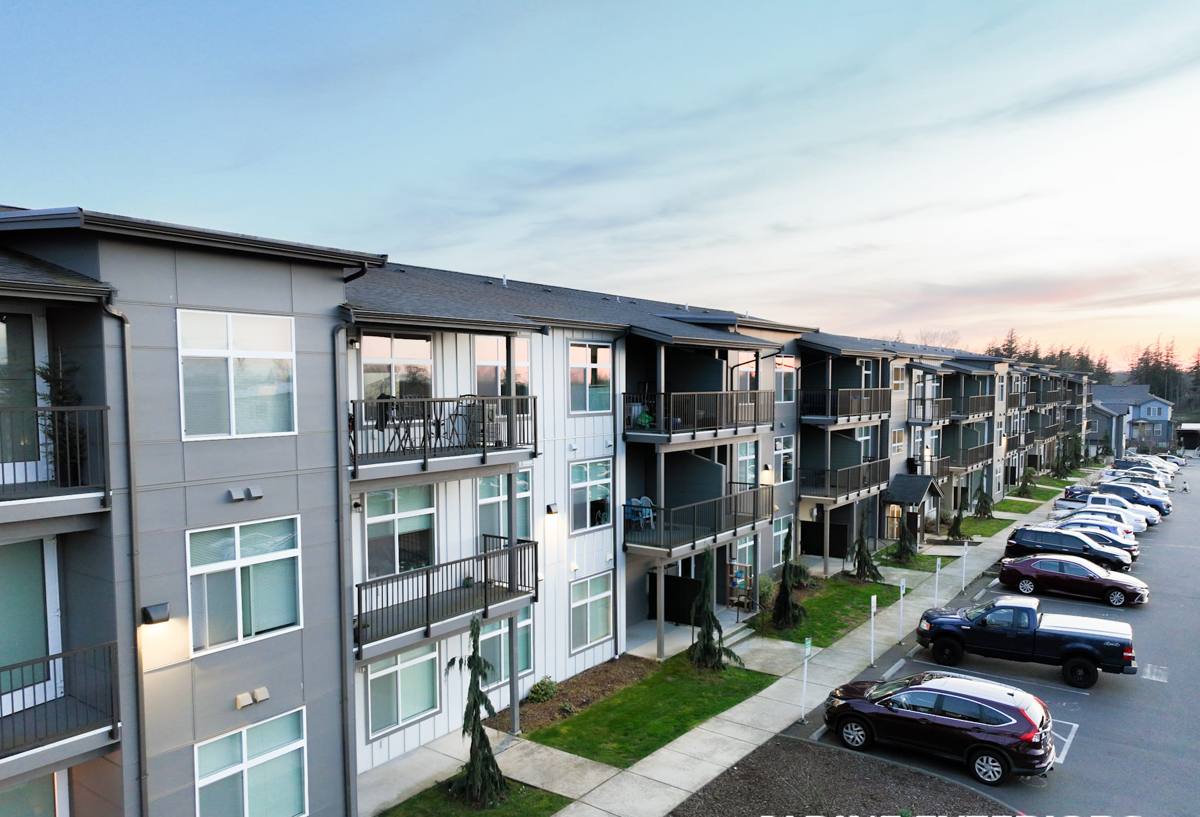
Signs Your Oak Harbor Home's Siding Has Reached the End of Its Life
Some warning signs are obvious. Others are easy to write off as cosmetic until they turn into a bigger repair. Walk your exterior and look for the following:
- Cracking, buckling, or visibly warped siding panels, especially on walls that face prevailing wind and rain
- Soft or spongy spots when you press on the siding near the bottom edges or around trim
- Paint that's peeling, bubbling, or chalking off on your hand when you touch it
- Moss or dark algae streaks that keep coming back within a season or two of cleaning
- Gaps opening up at seams, corners, or where siding meets window and door trim
- Rust staining below fasteners or trim pieces
- A noticeable jump in heating bills, which can point to moisture-compromised insulation behind the siding
- Visible layering or previous patch repairs that no longer match or seal properly
Any one of these on its own might be a minor fix. Several together, especially on a home that's had the same siding for fifteen-plus years, usually means it's time to look at full replacement rather than another round of patching.
Why We Install Only James Hardie Fiber Cement Siding
We don't install vinyl, LP SmartSide, primed spruce, cedar, or other fiber cement brands. That's a deliberate standard, not a sales pitch, and it comes directly from what holds up in exposure like Oak Harbor sees.
Built for marine and coastal exposure
James Hardie fiber cement is non-combustible and dimensionally stable, meaning it doesn't expand, contract, or warp with moisture and temperature swings the way wood-based and vinyl products can. Hardie also engineers specific product lines — its HZ5 designation, in particular — for regions with higher moisture exposure, which is a more honest match for this stretch of coastline than a general-purpose siding product.
A factory finish that outlasts field-applied paint
Hardie's ColorPlus finish is baked on at the factory under controlled conditions, which gives it more consistent coverage and better fade resistance than paint applied on site after installation. In a climate where field-applied paint takes a beating from salt air and constant damp, starting with a factory finish is one less point of failure over the life of the siding.
What a Correct Siding Replacement Actually Involves
The siding itself only does its job if what's underneath it and around it is done right. Most siding failures we're called out to inspect trace back to installation shortcuts, not the material itself.
Tear-off and what's underneath matters most
Full removal of the old siding lets us actually see the sheathing, framing, and any hidden moisture damage before it's covered back up. Skipping this step, or reusing an existing barrier that's already compromised, is how new siding ends up sitting on top of an old problem.
Water-resistive barrier and flashing details
A continuous, properly lapped water-resistive barrier behind the siding, with correctly integrated flashing at every window, door, and roofline intersection, is what actually keeps wind-driven rain out of the wall assembly. This is the least visible part of the job and the part most likely to be rushed on a lower-bid install.
Fastening, clearances, and caulking discipline
James Hardie publishes specific fastening patterns, gap requirements, and clearances from grade, roofing, and other surfaces, and those specs exist for a reason — they're what let the material manage moisture and movement the way it's designed to. Manufacturer specs also tie directly to warranty coverage, so an install that ignores them can quietly void protection the homeowner thinks they still have.
Comparing Siding Materials for a Coastal Washington Home
| Material | Behavior in salt air and driving rain | Maintenance burden | Warranty structure |
|---|---|---|---|
| James Hardie fiber cement | Non-combustible, dimensionally stable, HZ5 line engineered for higher-moisture regions | Low — factory finish resists fading and chalking | Strong transferable manufacturer warranty when installed to spec |
| Vinyl siding | Can warp or become brittle with temperature swings; seams are a moisture entry point | Low upfront, but damage and fading are hard to spot-repair | Prorated warranties that lose value over time |
| LP SmartSide / engineered wood | Wood-based core is more sensitive to sustained moisture exposure | Moderate to high — edge sealing and paint upkeep matter | Coverage often has moisture-related exclusions |
| Cedar or primed spruce | Natural wood movement and moisture absorption in a wet, salt-air climate | High — regular refinishing and moisture monitoring needed | Typically no manufacturer warranty on the material itself |
None of these are inherently bad products in the right application. This comparison reflects what we've found matters most for homes taking on Oak Harbor's specific combination of salt air, driving rain, and prolonged damp shade — which is why we standardized on one material rather than offering all of them.
Our Process, Start to Finish
- Free on-site inspection, including a look at the current siding, trim, and any visible moisture damage
- A written estimate that spells out material, scope, and what's included — no vague allowances
- Full tear-off of old siding so we can inspect sheathing and framing before anything gets covered
- Repair of any rot or moisture damage found underneath, documented before it's closed back up
- Installation of water-resistive barrier and flashing at every penetration and transition
- James Hardie siding installed to manufacturer fastening, clearance, and gap specifications
- Final walkthrough so you can see the finished work and ask questions before we consider the job done
Cost Factors for Siding Replacement in Oak Harbor
Every home is different, but the same handful of factors drive most of the cost variation we see on siding replacement bids in this area:
- Total square footage and the number of stories, which affects both material and labor
- How many layers of old siding need to come off, and whether any of it was installed over damaged sheathing
- The amount of trim, corners, and architectural detail around windows and doors
- Extent of hidden rot or moisture damage discovered once tear-off starts
- Siding profile and accessory choices, since Hardie offers several plank and panel styles at different price points
We won't know exact numbers for your home until we've actually looked at it, but we'll walk you through each of these factors during the estimate so the final number isn't a surprise.
Why Hiring a Crew That Already Works Oak Harbor Matters
Siding crews that mostly work drier, inland areas don't always plan for what this part of Washington's coast throws at a building envelope. Flashing details that are optional in a low-exposure climate aren't optional here. A crew that's used to Oak Harbor's combination of salt air, sideways rain, and a moss season that runs most of the year builds those details in as standard practice, not an upsell. That local familiarity is also what lets us look at a wall and recognize early moisture damage before it turns into a much larger repair.
If your siding is showing any of the signs above, or you're just planning ahead, we're happy to come take a look. Estimates are free, there's no pressure, and you'll get a straight answer about what your home actually needs.