 Anacortes Siding
 Roofs in Edison Take a Different Kind of Beating
Edison sits out on the flatlands near Samish Bay, exposed to weather moving in off the Salish Sea with little to break it up. That combination of open exposure, salt-laden air, and near-constant winter moisture puts a different kind of stress on a roof than you'd see further inland. Wind doesn't just gust here — it drives rain sideways under shingle tabs and around flashing that would otherwise stay dry in a calmer location. Add in Skagit County's long, shaded moss season, and you have a roof that's working harder than most homeowners realize, year-round, not just during the one big storm that finally gets noticed.
That's the problem with storm damage: by the time it's obvious — a stain on the ceiling, a shingle in the yard, water at a light fixture — the roof has usually been compromised for a while. Our storm damage roof repair work in Edison focuses on catching and correctly fixing both the obvious damage and the slower failures that led up to it.
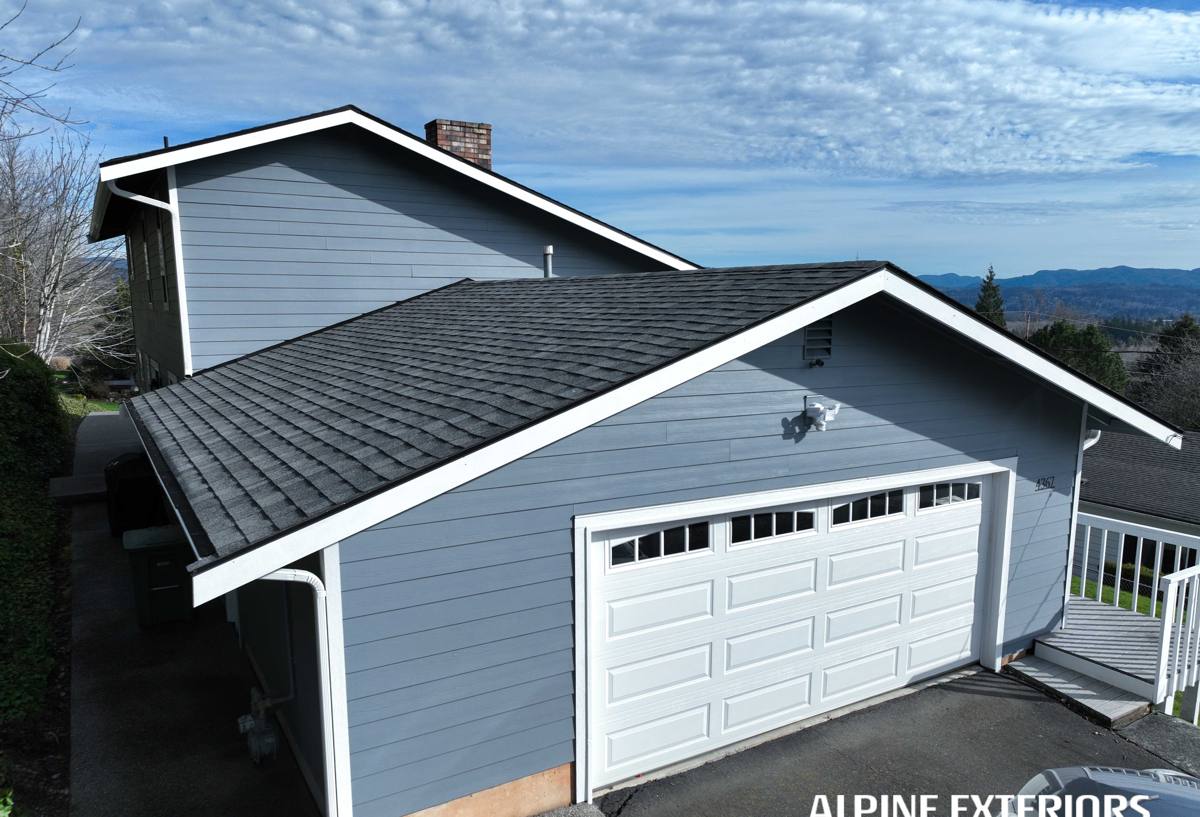
What Actually Counts as Storm Damage
Homeowners often assume storm damage means a hole or missing shingles. In practice, most of what we repair after weather events in this area falls into a handful of categories:
- Wind-lifted or creased shingles — tabs that got peeled back or bent by gusts and no longer seal flat, even if none actually blew off
- Flashing separation — around chimneys, skylights, and roof-to-wall transitions, where repeated wind-rock and thermal movement work fasteners loose
- Driving-rain intrusion — water forced sideways under laps and edges that would never leak in a straight-down rain
- Moss and organic buildup damage — moss holds moisture against the shingle mat and lifts edges, which turns a moderate storm into a leak that a clean roof would have shed without issue
- Impact damage — branch strikes and debris, which is common given how many mature trees line properties in this part of Skagit County
The distinction matters because the repair is different for each. A wind-lifted shingle that hasn't cracked can sometimes be re-sealed. A creased one has to be replaced — it's already broken, it just hasn't leaked yet.
Why Salt Air and Moss Change the Math
Two things make storm damage in this area harder to diagnose than in a drier, inland climate. First, salt air off the bay accelerates corrosion on exposed fasteners, drip edge, and flashing — metal that's already a few years compromised will fail faster under wind stress than fresh metal would. Second, moss doesn't just sit on top of a roof; it grows under tab edges and holds water there, so a section that looks intact from the ground may already be soft or delaminating underneath. We check both when we're out for storm damage, not just the spot the homeowner called about.
Our Storm Damage Repair Process
We keep this straightforward, because storm repair is stressful enough without added confusion:
- Ground and roof-surface inspection. We walk the roof (weather permitting) and check attic space from inside for moisture, staining, or daylight — interior signs often tell us more than the surface does.
- Damage mapping. We document exactly what's affected: shingle count, flashing condition, decking softness, and whether moss or prior wear contributed.
- Honest scope discussion. We tell you plainly whether this is a targeted repair, a larger repair, or a sign the roof is near the end of its useful life. We don't pad small jobs into big ones, and we don't undersell a job that needs more than a patch.
- Repair. Matching shingles as closely as possible, replacing compromised flashing rather than re-caulking it, and re-securing anything that's structurally sound but was loosened by wind.
- Follow-up check. On active leaks, we prefer to verify dry conditions after the next real rain rather than call it done on a sunny-day inspection alone.
Repair vs. Replace: How We Make the Call
| Situation | Usually a Repair | Usually Points to Replacement |
|---|---|---|
| Shingle age | Under ~12-15 years, matching material available | Near or past expected lifespan, granule loss widespread |
| Damage extent | Isolated area — one slope, one flashing point | Damage scattered across multiple slopes |
| Decking condition | Solid, no soft spots found | Soft or delaminated decking found during inspection |
| Moss history | Light, recently treated | Heavy, long-term moss with visible mat lifting |
| Underlying leaks | Single, clearly sourced leak | Multiple leak points or unclear origin suggesting systemic wear |
Most storm calls we get in Edison are legitimate repairs — a section of flashing, a run of lifted shingles, a spot where a branch came down. But part of doing this work honestly is telling a homeowner when a repair would just be a temporary fix on a roof that's already at the end of its service life.
Materials and Matching
Repair work only holds up if the materials tie into the existing roof correctly, not just visually but functionally. We match shingle type and, where possible, color family so patched sections don't stand out more than necessary. On flashing, we replace rather than reseal in salt-exposed areas — caulk over corroded metal is a short-term cover, not a fix, and it tends to fail again within a season or two out here. Underlayment gets replaced in any area we open up, even if the original underlayment looked serviceable, since it's the actual water barrier once a shingle has already failed once.
We use standard, widely available roofing materials rather than specialty products that are hard to source for future repairs. A roof that can only be serviced by one supplier becomes a problem the next time storm damage happens — we'd rather build in a repair path that any qualified crew can follow later if needed.
Insurance and Documentation
Many storm repairs in this area involve a homeowner's insurance claim. We provide clear photo documentation and a written scope of damage that you can hand directly to your adjuster. A few things worth knowing going in:
- Wind and impact damage are typically covered; gradual wear from moss or age typically is not — an honest assessment protects your claim more than an inflated one
- Getting a repair scoped promptly after a storm matters — delayed damage can raise questions about whether it was storm-related or pre-existing
- We're happy to meet an adjuster on-site if that's useful, but the estimate and repair work is between you and us — we don't work for the insurance company
Why a Crew That Already Works Edison Matters
Edison is a small community, and the roofs here share a lot in common — similar exposure to wind off the bay, similar moss patterns from the tree cover, similar salt-air effects on metal. A crew that's worked roofs in this specific part of Skagit County already knows what tends to fail here and where to look first, instead of treating every storm call as a blank slate. That familiarity shows up in faster, more accurate diagnosis — we're not guessing at what "normal" looks like for a roof exposed to this climate.
It also matters for response time after a real weather event. When a windstorm moves through Skagit County, storm damage calls come in from a wide area at once. Knowing the neighborhoods we're already working in lets us prioritize efficiently without leaving anyone waiting longer than necessary.
Signs Your Roof May Have Storm Damage
Not all damage announces itself with a leak. Worth checking after any significant wind or rain event:
- Shingle granules collecting in gutters or at downspout outlets
- Shingles that look curled, lifted, or "off-color" compared to the rest of the roof
- Flashing that looks bent, separated, or has visible gaps at chimneys and vents
- Any soft spot, sag, or staining on interior ceilings, especially near exterior walls
- Moss buildup that's thickened noticeably since last season
- Debris, branches, or granule "shadows" left on the roof surface after a storm
None of these guarantee a problem, but any of them is worth a look before the next storm finds the weak spot for you.
What Storm Damage Repair Typically Involves Cost-Wise
| Factor | Why It Affects Cost |
|---|---|
| Roof pitch and access | Steeper or harder-to-reach sections take longer and need more safety setup |
| Extent of shingle replacement | Spot repairs cost less than a full slope; matching older materials can add time |
| Flashing scope | Full flashing replacement costs more than resealing, but lasts longer, especially near salt air |
| Decking condition | Any soft or rotted decking found underneath adds material and labor |
| Moss and debris removal | Heavier buildup requires more prep time before repair can even start |
Because every roof and every storm event is different, we don't quote a number without seeing the roof — but we'll always walk you through what's driving the cost before any work starts, so there are no surprises on the invoice.
If a recent storm has you wondering about the condition of your roof, we're glad to come out and take an honest look. The estimate is free, there's no pressure to move forward, and if it turns out to be nothing serious, we'll tell you that too — just fill out the form below to get started.