 Anacortes Siding
 Ship Harbor Roofs Take a Different Kind of Beating
Homes near Ship Harbor sit right where Fidalgo Island meets open water, and that location comes with a trade-off. The views are worth it, but the roof over your head is working harder than a roof ten miles inland. Wind off Rosario Strait and the Salish Sea doesn't just blow rain sideways during a storm — it drives salt-laden moisture into every gap, seam, and fastener a roof has. Add Skagit County's long, wet winter season and the moss growth that comes with it, and you've got a roof system that ages faster than the manufacturer's warranty paperwork assumes it will.
Storm damage repair in this specific area isn't just "patch what blew off." It's understanding that the same storm that lifted three shingles on a sheltered inland roof might have driven water under six shingles on a Ship Harbor roof because the wind hit it at a different angle, with more force, carrying more moisture. We treat storm repair here as both a fix and a chance to catch what the storm exposed before it turns into a bigger problem next winter.
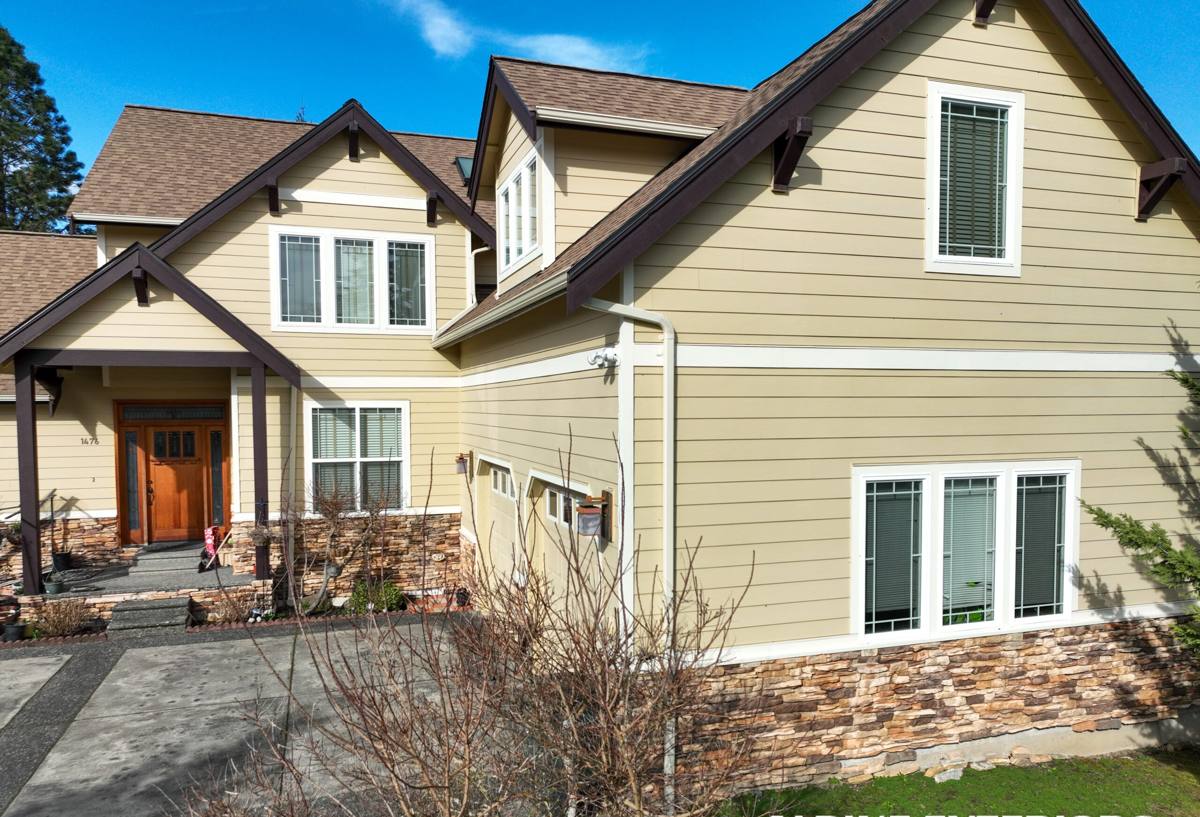
What Storm Damage Actually Looks Like on a Local Roof
Wind Damage
Sustained coastal wind and gusts during a frontal system don't just rip shingles off cleanly — they work edges loose first. You'll often see creased shingles, lifted tabs that haven't fully separated yet, and fastener backing where nails have worked partway out. These are the ones that look "mostly fine" from the ground and cause a leak three storms later.
Wind-Driven Rain and Moisture Intrusion
Because storms here frequently come in horizontal rather than straight down, water finds its way under flashing, around chimneys, and along ridge caps that would stay dry in a calmer rain event. This is the damage that's hardest to spot from a ladder and easiest to miss without pulling back a shingle course or two.
Debris Impact
Mature trees are common near Ship Harbor, and branch and limb debris during wind events can crack shingles, dent metal flashing, or puncture underlayment in a concentrated spot rather than spreading damage across the whole roof.
Moss and Trapped Moisture
Moss isn't storm damage on its own, but a moss mat that's been sitting on a roof through a wet Anacortes winter holds water against the shingle surface, and that's exactly the weak spot a storm exploits. We frequently find that storm damage is worse in areas where moss had already been holding moisture before the storm hit.
What a Correct Storm Damage Repair Actually Involves
Assessment Before Anything Gets Touched
A proper storm repair starts with a full roof walk, not just a look at the obvious damage from the driveway. That means checking every slope, all flashing points, ridge and hip lines, and the attic or crawlspace underneath for signs water already got in. Storm damage is rarely limited to the spot you can see from the ground.
Matching the Repair to the Damage
Not every storm-damaged roof needs a full section replaced. Isolated wind lift with intact underlayment often just needs the affected shingles re-secured or replaced in kind. Damage that reached the underlayment or decking needs that layer opened up, dried, and rebuilt properly — patching over wet decking just traps the problem under new shingles.
Fastening Correctly for Coastal Wind
A repair that goes back in with the same fastening pattern that failed the first time will fail again in the next comparable storm. We fasten to match the wind exposure the section actually sees, not just to code minimums, particularly on roof edges and corners where uplift forces are highest.
Our Process, Start to Finish
- Initial contact and photos. We ask what you're seeing and when the damage happened, which helps us prioritize if there's an active leak.
- On-site inspection. We walk the roof, check the attic side, and document everything with photos before any repair begins — useful for you and for insurance if you're filing a claim.
- Written scope and estimate. You get a clear explanation of what's damaged, what needs repair versus what's cosmetic, and a real price range before work starts.
- Temporary protection if needed. If there's an active leak or exposed decking, we get it weathertight first, even if the full repair is scheduled for later.
- The repair itself. Shingles, flashing, underlayment, or decking replaced as needed, matched to the surrounding roof as closely as possible.
- Final walk-through. We show you what was done and what to watch for going forward, especially if moss or drainage issues contributed to the damage.
Repair or Full Replacement? How We Make That Call
Homeowners often assume storm damage means a new roof, and just as often assume it must be a quick patch. Neither is automatically true. The right call depends on the roof's age, how much of the underlying structure was affected, and how the damage is distributed.
| Factor | Leans Toward Repair | Leans Toward Replacement |
|---|---|---|
| Roof age | Under 12–15 years, otherwise sound | Nearing or past expected lifespan |
| Damage spread | Isolated to one slope or section | Multiple slopes, widespread lifting |
| Decking condition | Dry, structurally solid | Soft, rotted, or repeatedly wet |
| Prior moss/moisture history | Minimal or well-managed | Long-term moss mats, chronic damp spots |
| Underlayment condition | Intact around the damaged area | Degraded or missing in multiple spots |
We'll tell you honestly which side of that table your roof falls on. A repair that's going to need redoing in two years because the roof was already near the end of its life isn't a good use of your money, and we'll say so.
Materials and Methods for This Exposure
For a coastal, moss-prone climate like Ship Harbor's, the details under the shingles matter as much as the shingles themselves. We pay particular attention to underlayment quality and coverage in repair areas, correct flashing overlap at chimneys and walls, and fastener choice that holds up against salt air corrosion over time. None of this is exotic — it's standard trade practice applied carefully, because on this coastline the areas where installers cut corners are exactly the areas that fail first.
We're also honest about product trade-offs rather than picking a brand and pretending it's magic. Some underlayment and flashing products handle repeated wet-dry cycling better than others, some require more precise installation to perform as designed, and some have maintenance implications homeowners should know about up front. We'll walk you through what we're using and why for your specific repair.
Insurance and Documentation
If your storm damage is significant enough to involve a homeowner's insurance claim, documentation matters. We photograph damage before and during the repair, provide a written scope of work, and can speak with your adjuster if that's helpful. We're not an insurance company and won't promise a claim outcome, but we've been through this process enough times locally to know what documentation actually helps and what doesn't.
Why a Crew That Already Works This Area Matters
Storm damage repair on a Ship Harbor roof isn't the same job as storm repair inland. A crew that already works this stretch of Skagit County knows how wind behaves coming off the water at different points on a roof, knows what moss buildup typically looks like on homes with this kind of tree cover and shade pattern, and isn't guessing at how the local climate will treat a repair over the following winter. That familiarity shows up in fewer callbacks and repairs that are built for the conditions they'll actually face, not generic conditions.
A Quick Checklist Before You Call Anyone
- Note when the damage happened and whether there's an active leak right now
- Take photos from the ground if it's safe — don't get on the roof yourself after a storm
- Check the attic or top-floor ceilings for water stains, even if the roof "looks fine"
- Ask any contractor you're considering whether they inspect the attic side, not just the exterior
- Get a written scope, not just a verbal price, before work begins
- Ask how the repair will be fastened differently than what failed, if anything
If a recent storm left you with lifted shingles, a new drip, or just a nagging feeling you should get it looked at, we're happy to come take a real look. The estimate is free, there's no pressure to sign anything on the spot, and you'll get a straight answer about whether it's a repair or something bigger — just fill out the form below.