 Anacortes Siding
 Windows Built for the March Point Environment
March Point sits out on open water on more sides than most Anacortes neighborhoods, which means homes there take a heavier dose of everything Skagit County's weather has to offer. Salt-laden air off the surrounding bays works into window frames and hardware year-round. Driving rain off Rosario Strait and the Sound doesn't fall straight down here — it comes in sideways, which is exactly the condition that exposes a poorly flashed or loosely caulked window. And the long stretch of wet, low-light months from fall through spring keeps everything damp long enough for moss and mildew to get a foothold on anything that traps moisture, including window sills and trim.
None of that makes window installation in March Point impossible — it just means the margin for error is smaller than it is in a drier, more sheltered inland location. A window that would perform fine for twenty years in a protected valley lot can start failing in five or six years out here if it wasn't installed with this specific exposure in mind. That's the gap we focus on closing.
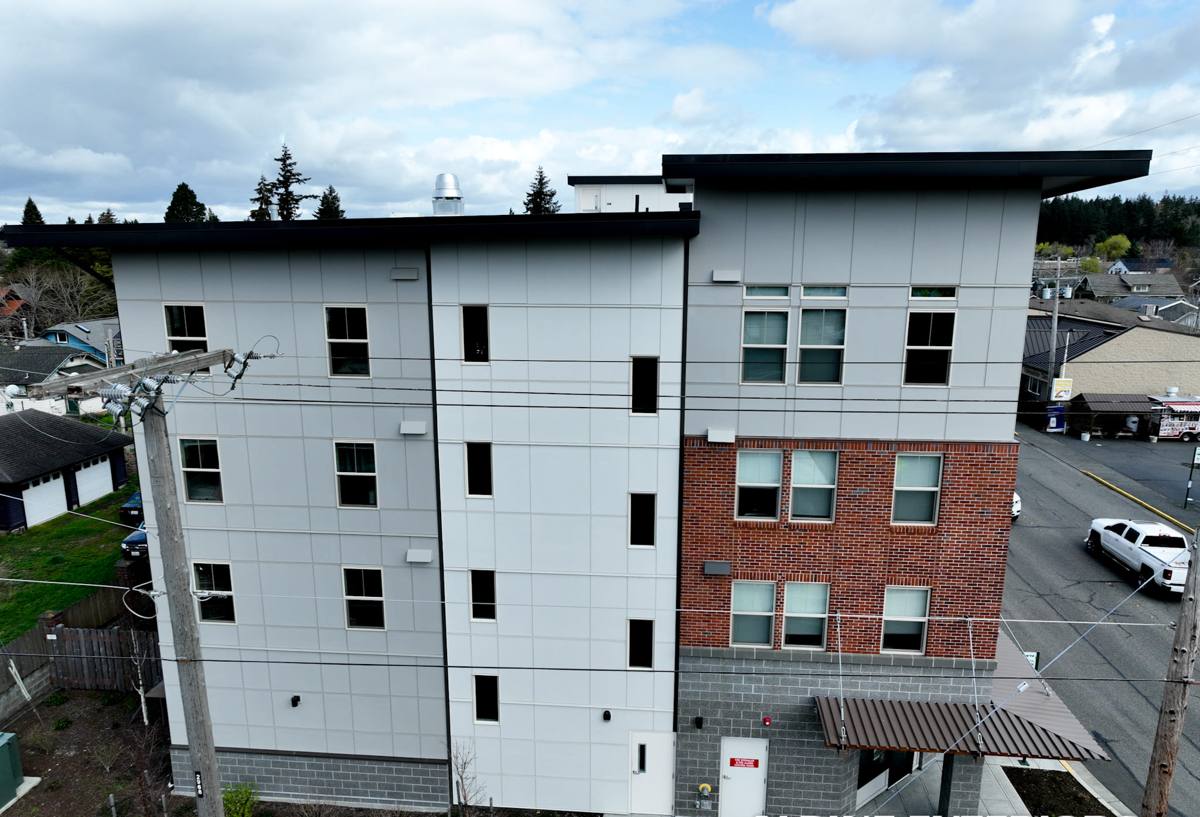
Signs a March Point Home Needs Attention
Because salt air and wind-driven rain work on windows slowly, a lot of homeowners don't notice a problem until it's already inside the wall. Some signs worth acting on early:
- Fogging or a permanent haze between panes on double-pane windows — the seal has failed and moisture is trapped inside the glass unit
- Corroded or stiff hardware — latches, cranks, or locks that have gone gritty or hard to turn are usually reacting to salt exposure
- Soft or discolored wood trim around the frame, especially on the side of the house facing prevailing wind and rain
- Moss or dark streaking building up on sills, window boxes, or the trim just below a window
- Drafts or a noticeable temperature difference near the glass on windy days
- Paint or finish that's bubbling or peeling specifically around the window opening, which often points to moisture getting behind the trim rather than a simple paint problem
Any one of these on its own might just mean it's time to replace a window. Several of them together, especially on the weather-facing side of the house, usually means moisture has already found a path into the wall assembly and the fix needs to start there, not just at the glass.
What a Correct Window Installation Actually Involves
The window unit itself is the easy part — most quality windows on the market will perform well if they're installed correctly. The installation is where jobs succeed or fail in a marine environment like March Point. A correct install includes:
Flashing and Water Management
Every window opening needs to be flashed so that any water that gets past the exterior trim is directed back out, not down into the wall framing. That means proper sill pan flashing at the bottom of the opening, side flashing that laps correctly with the weather-resistive barrier, and head flashing at the top that sheds water forward, away from the wall. In a spot that takes driving rain regularly, skipping or shortcutting this step is the single most common cause of hidden rot behind window trim.
Sealing and Insulation
The gap between the window frame and the rough opening needs to be sealed against air and water intrusion, then insulated so it isn't a cold spot in the wall. Overfilling that gap with expanding foam can bow the frame and cause the window to operate poorly; underfilling it leaves a draft and a condensation point. It has to be done with the right material and the right amount.
Fastening and Squaring
A window that isn't shimmed and fastened square will bind, won't seal evenly against its own weatherstripping, and will wear unevenly at the corners. This is a basic step, but it's also one of the most commonly rushed on production-schedule installs.
Exterior Trim and Finish
The trim around the window is the first line of defense and the first thing exposed to salt air and standing rain. It needs to be sealed on all sides, including the back where it meets the wall, and finished with a product that can handle repeated wet-dry cycling without cracking or trapping moisture against the wood.
Our Installation Process
- On-site assessment — we look at the existing window openings, check for any signs of moisture damage already in progress, and note the specific exposure of each wall (which sides take the worst of the wind and rain)
- Measuring and ordering — accurate measurements matter more on replacement work than new construction, since we're fitting into an existing opening rather than building to spec
- Removal — the old window and any deteriorated trim or sheathing around it comes out, and we check the framing underneath before anything new goes in
- Flashing and prep — sill pan, side, and head flashing installed correctly and integrated with the existing weather barrier, with any damaged sheathing addressed before the new window goes in
- Setting the window — shimmed, squared, and fastened per manufacturer specification
- Sealing and insulating — the gap around the frame is filled and sealed properly, not just foamed and forgotten
- Exterior trim and finish — trim reinstalled or replaced, caulked, and finished to shed water away from the opening
- Final check — every window is operated, checked for square and smooth function, and inspected for a clean seal before we call the job done
Frame Material Comparison for a Marine Climate
| Frame Material | Salt Air / Moisture Behavior | Maintenance |
|---|---|---|
| Vinyl | Handles salt air and moisture well; won't rot or corrode | Low — occasional cleaning |
| Fiberglass | Very stable in wet, salty conditions; minimal expansion/contraction | Low |
| Aluminum-clad wood | Good exterior protection if the cladding is fully sealed at every joint; failure points show up if the cladding is breached | Moderate — watch seams and corners |
| Solid wood | Most vulnerable to rot and moss growth in this environment without diligent upkeep | High — regular repainting/sealing |
We don't push one material on every homeowner — a well-maintained wood window can still make sense for a period-style home, but we're upfront that it's a bigger commitment out here than vinyl or fiberglass. The bigger factor in long-term performance is almost always the quality of the installation, not just the frame material.
What Affects the Cost of a Window Installation
| Factor | Why It Matters |
|---|---|
| Frame material | Vinyl and fiberglass typically cost less upfront than clad-wood or solid wood units |
| Number and size of openings | More windows and larger openings mean more material and labor |
| Condition of existing framing | Hidden rot or damage found during removal adds repair work before the new window can go in |
| Wall exposure | Weather-facing walls sometimes warrant extra flashing detail, which adds a bit of time per opening |
| Trim and finish work | Matching existing trim profiles or upgrading finish materials affects both cost and long-term maintenance |
Every March Point property is a little different, and the only way to give a real number is to look at the actual openings and the condition behind them. We'll give you a straightforward estimate after that assessment, not a guess over the phone.
What to Look For When Hiring a Window Contractor
- Ask specifically how they flash a window opening — a contractor who can explain sill pan, side, and head flashing in plain terms knows what they're doing
- Confirm they carry current licensing and insurance, and ask to see it
- Ask what happens if they find rot or damage once the old window is out — a clear answer beats a surprise change order
- Find out what warranty covers the installation itself, separate from the manufacturer's product warranty
- Ask whether they've worked in exposed coastal or marine-adjacent settings before, not just inland jobs
- Get a written estimate that itemizes materials, not just a single lump-sum number
Why a Crew That Already Works March Point Makes a Difference
A contractor who's worked this specific stretch of Anacortes knows which wall orientations take the worst of the driving rain, how fast moss builds up on north- and west-facing trim here, and what kind of flashing detail actually holds up against salt air over years, not just at the final walkthrough. That's not something you can fully substitute with a generic install checklist. It comes from having done the work in this exact environment and having gone back to see how it held up.
We're an Anacortes-based crew, and Skagit County's coastal conditions are what we build for every day — not an occasional job type we handle between projects in drier parts of the state.
Living With Your New Windows: Simple Upkeep
Even a correctly installed window benefits from a little seasonal attention in this climate:
- Rinse salt residue off frames and glass periodically, especially after storms
- Keep an eye on caulking around the exterior trim and touch it up before a gap opens up, not after
- Clear moss and debris off sills and window boxes before it holds moisture against the trim
- Operate each window a few times through the year so hardware doesn't seize up from disuse combined with salt air
- Check weatherstripping annually — it's a cheap, quick fix that prevents bigger draft and moisture problems
If you're seeing any of the warning signs above, or you're just ready to stop fighting drafty, foggy, or hard-to-operate windows, we're happy to take a look and walk you through what we'd recommend for your specific home. Reach out for a free, no-pressure estimate using the form below.