 Anacortes Siding
 Window Replacement Built for Bow's Coastal Conditions
Bow sits in the rural stretch of Skagit County between Anacortes and Burlington, close enough to Samish Bay and Padilla Bay that salt-laden air is just part of daily life. Add in the driving rain that comes off the water most of the fall and winter, plus a moss season that can stretch six months or more under the tree cover common to the area, and you have a climate that is genuinely harder on windows than most manufacturers' warranty language accounts for. A window that would last two or three decades in a dry inland climate can start failing in half that time out here if it wasn't installed with this environment in mind.
We work on homes throughout the Bow area regularly, from older farmhouses on larger rural parcels to newer construction closer to the water. The window issues we see are consistent enough that we can usually tell what's going on before we even get inside.
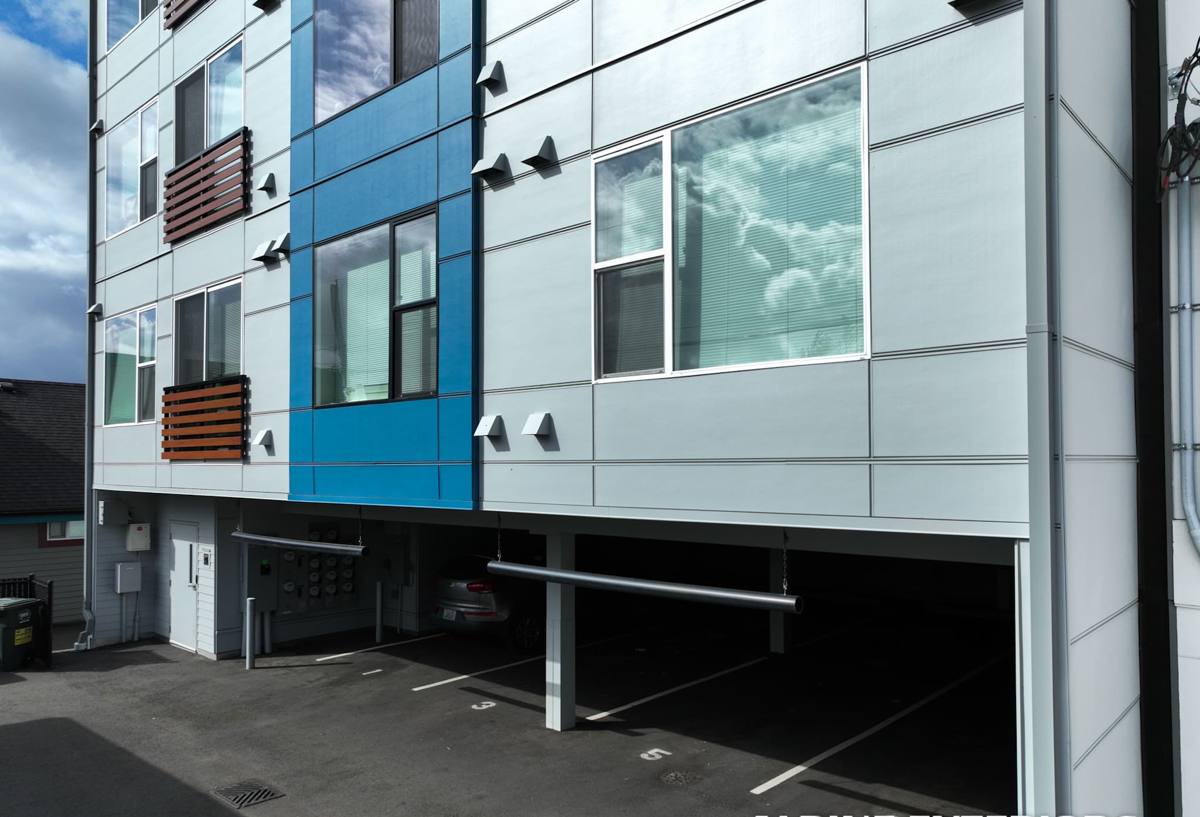
How Salt Air, Rain, and Moss Actually Damage Windows
Salt air and hardware corrosion
Airborne salt from the bay doesn't just sit on glass — it works into window hardware, aluminum cladding, and exposed fasteners. Locks get stiff, cranks on casement windows seize up, and unprotected metal starts pitting years before it should. This is a slow, steady process, which is why homeowners often don't notice until a window won't latch properly anymore.
Driving rain and wind-driven moisture
Bow's exposure to weather rolling in off the water means rain frequently hits windows at an angle instead of falling straight down. That matters because it puts pressure on seals and flashing details that a window facing a more sheltered direction would never experience. Wind-driven rain finds any gap in the flashing or sealant and pushes water where gravity alone wouldn't take it.
The long moss season
On tree-shaded lots and north-facing walls, moss and algae hold moisture against trim and sills for extended stretches. That constant dampness accelerates wood rot around window openings and breaks down caulk and sealant faster than in drier, sunnier parts of the county.
Signs a Bow Home's Windows Are Past Their Useful Life
- Fogging or a visible haze between the panes of double-pane glass (the seal has failed)
- Soft or spongy wood trim around the window frame, especially on north- or west-facing walls
- Locks, cranks, or sliders that have become stiff, corroded, or won't fully engage
- Visible moss, algae, or persistent dark staining on the sill or exterior trim
- Cold drafts near the frame even when the window is fully closed and latched
- Condensation forming on the interior glass or frame during cold, wet weather
- Wood or vinyl that has visibly warped, bowed, or separated from the wall
Any one of these on its own might just mean a repair. Several at once, especially on an older window, usually means replacement is the more cost-effective path.
What a Correct Window Replacement Actually Involves
Swapping in a new window is the easy part. The details that determine whether it survives Bow's climate happen underneath the trim, where nobody sees them until something goes wrong.
Sill pan flashing
A sloped, sealed sill pan under the window opening gives any water that does get past the window a way out, instead of a place to collect. This single detail is one of the most common things we find missing or done incorrectly on older installs in this area.
Integration with the house's water barrier
The window's flashing needs to shingle-lap correctly with the house wrap or building paper above and below it, so water is directed out and over the wall, not behind it. This is where a lot of failures in wind-driven rain actually originate — not the window unit itself, but a flashing sequence that wasn't lapped correctly.
Sealants rated for coastal exposure
Not every exterior sealant holds up to repeated salt exposure and constant wet-dry cycling. We use sealants and backer rod suited to marine and coastal conditions rather than a generic interior-grade caulk, because the wrong sealant here can crack and open a gap within a year or two.
Insulation and air sealing
Low-expansion foam or mineral wool around the frame closes the gap between the window and the rough opening, cutting drafts and giving moisture one less path into the wall cavity.
Choosing Materials That Hold Up in This Climate
There's no single "best" window material — the right choice depends on the home, the budget, and how exposed the wall is to salt air and driving rain. Here's how the common options compare for a Bow-area installation:
| Material | Salt Air / Coastal Performance | Maintenance | Typical Fit |
|---|---|---|---|
| Vinyl | Good — won't corrode or rust, handles moisture well | Low; occasional cleaning | Most homes; strong value for exposed walls |
| Fiberglass | Excellent — very stable in temperature swings and moisture | Low | Higher-exposure walls, longer-term ownership |
| Wood (unclad) | Poor without diligent upkeep — vulnerable to rot near the bay | High; regular painting/sealing required | Historic or period-accurate homes only, with realistic upkeep expectations |
| Aluminum-clad wood | Fair to good on the exterior face, but cladding seams need attention | Moderate | Homes wanting a wood interior look with a protected exterior |
For most Bow homes, especially anything with direct exposure to weather coming off the water, we steer people toward vinyl or fiberglass. It's not that wood windows can't work here — it's that the maintenance burden to keep unclad wood performing well in this much salt air and rain is more than most homeowners want to sign up for.
Our Process for Bow Homeowners
- On-site assessment. We look at every window being considered, check for rot or moisture damage in the surrounding framing, and measure openings precisely — older Skagit County homes rarely have perfectly square or standard-sized openings.
- Straightforward proposal. You get a clear breakdown of materials, the flashing and sealing approach for your specific walls, and a timeline, with no pressure to decide on the spot.
- Install day. Old windows come out, any rot or damaged framing gets addressed before the new unit goes in (not covered up), and flashing is integrated properly with your home's existing water barrier.
- Sealing and finish work. Coastal-rated sealants, correct insulation, and interior/exterior trim finished to match the rest of the home.
- Walkthrough. We test operation, locks, and weatherstripping with you before we consider the job done.
What Drives the Cost of a Bow Window Project
| Factor | Why It Matters Here |
|---|---|
| Extent of rot or water damage found at removal | Common in older window openings exposed to years of driving rain; repair adds time before the new unit goes in |
| Window material and glass package | Vinyl, fiberglass, and clad-wood carry different price points; double- vs. triple-pane affects both cost and performance |
| Number and size of openings | Larger picture windows and multi-unit combinations cost more than standard single units |
| Access and site conditions | Rural lots, longer driveways, and second-story openings can affect labor and staging |
| Flashing and sealant detailing required | Coastal-grade materials and correct sill pan work add modest cost but are not optional in this climate |
We'd rather walk you through actual numbers for your home than quote a broad range that doesn't mean much. That's what the on-site assessment is for.
Why It Matters to Hire a Crew That Already Works This Area
Bow isn't a dense subdivision — it's a spread-out rural community, and the homes reflect that. We regularly work on properties with older, owner-modified additions, outbuildings, well systems, and septic layouts that affect where equipment can go and how a job gets staged. A crew unfamiliar with rural Skagit County properties can lose real time just figuring out access and logistics that we already understand from having done this work in the area before.
We're also familiar with Skagit County permitting requirements where they apply to window replacement, and we build our sealing and flashing approach around the specific combination of salt exposure, wind-driven rain, and moss growth that defines this stretch of the county — not a generic install method used everywhere regardless of climate.
Keeping New Windows Performing Long-Term
- Rinse salt residue off exterior glass and frames periodically, especially after storms
- Keep gutters and downspouts clear so runoff doesn't sheet directly down over window openings
- Trim back vegetation that's shading window walls and contributing to moss buildup
- Lubricate locks and cranks on a regular schedule to head off corrosion before it sets in
- Re-check exterior caulk lines annually and touch up before small cracks become active leaks
If your windows in Bow are fogging, drafting, sticking, or just starting to look tired from years of salt air and rain, we're happy to take a look and give you an honest read on repair versus replacement. Estimates are free, there's no pressure, and you can request one through the form below.